
Hospitality
Atmosphere, grown into place.
Warm, tactile interiors where acoustic surface, lighting, and material character create a memorable guest experience.
NUMU
نُمُوّ
UAE — Bio-composites platform
Grown, not manufactured.
Scroll
NUMU · نُمُوّ · Dubai
Mycelium and local palm fibre, shaped into tactile surfaces, sculptural lighting and objects worth keeping.
Materials · Lighting · Objects
 01 / FOLD prototype ↗
 02 / Mushroomiya ↗
 03 / PALMYCO chair ↗
Real prototypes and material applications made by NUMU.
01 — Statement
NUMU is a Dubai material design and manufacturing studio. Our flagship material, PALMYCO™, is a grown mycelium foam — a proprietary bio-composite cultivated inside moulds from regional agricultural fibres, producing lightweight panels with distinctive three-dimensional texture.
Alongside PALMYCO™, NUMU leverages spent mushroom substrate — a regional waste stream — to produce heat-pressed composite boards. Two material outputs, one production base in Dubai. Circular by design.
02 — The Material
PALMYCO™ is NUMU's proprietary grown mycelium foam — a bio-composite cultivated from regional agricultural fibres bound by a living mycelium network. Rigid, breathable, sound-absorbent, and home-compostable. No binders. No petroleum. No synthetic residue. Trademark pending. Grown in Dubai.
PALMYCO™ properties are tuned through the growth cycle itself. Alongside it, NUMU presses composite boards from spent mushroom substrate — a separate material, a separate waste stream, a separate product line, made on the same Dubai production base.
Substrate inputs — regional agricultural residues
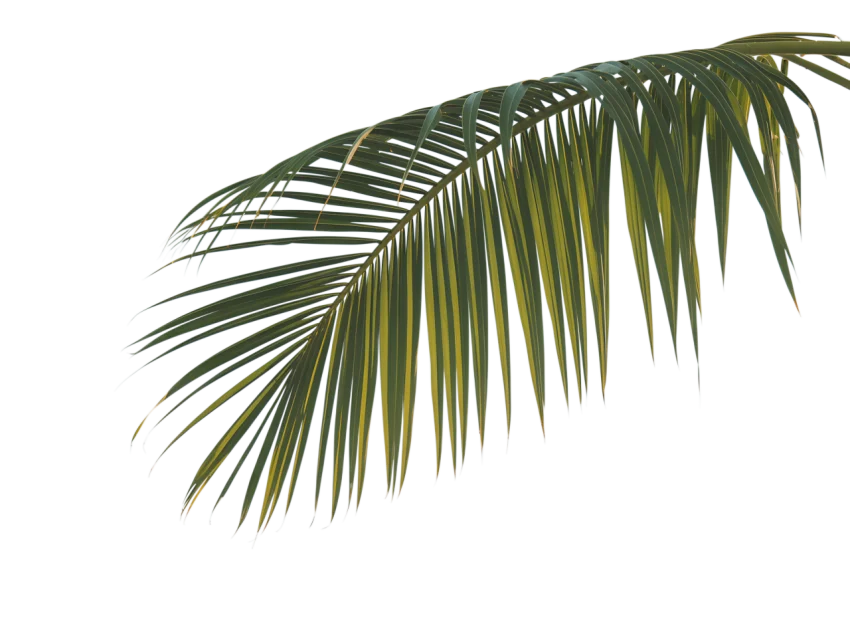
Palm leaf fibre
UAE date palm pruning waste, the region's largest agricultural residue stream.
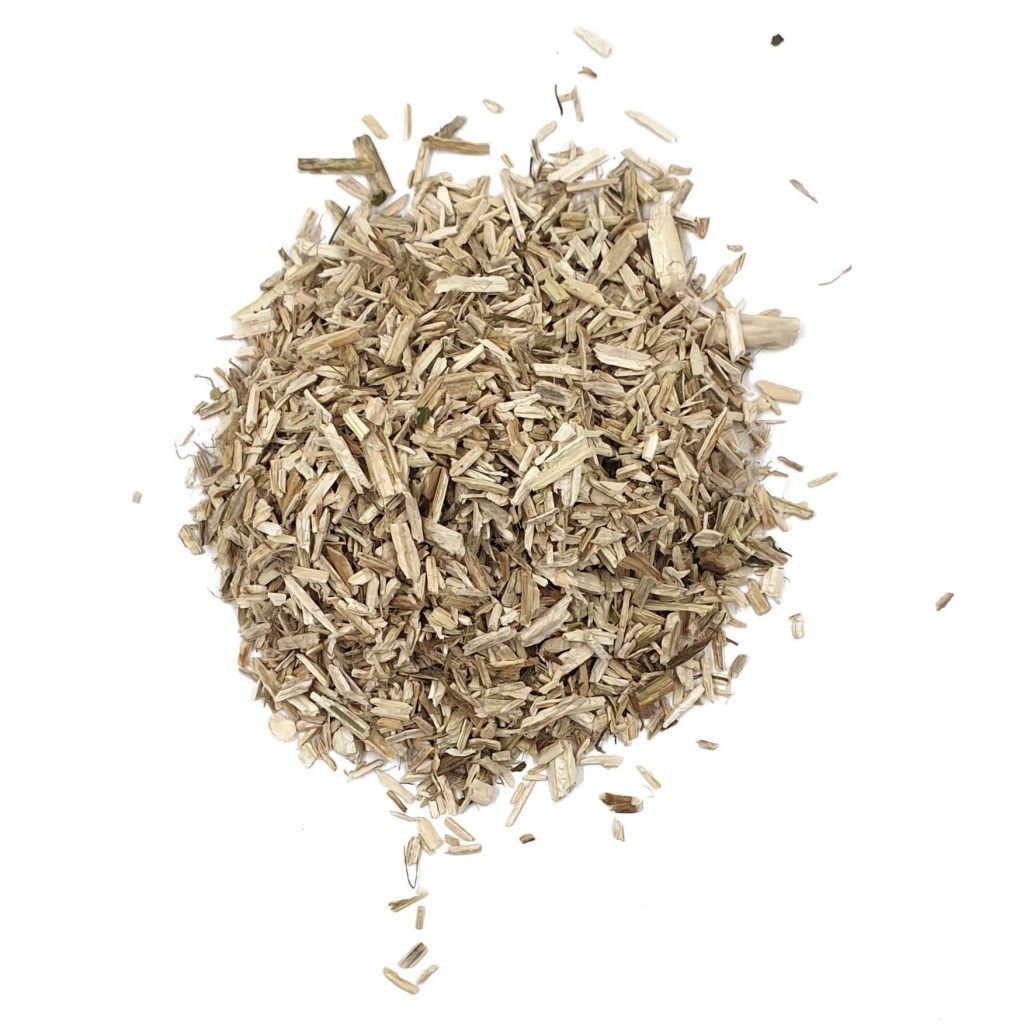
Plant fibre blend
Mixed agricultural by-products sourced regionally.
Spent mushroom substrate (SMS)
A waste stream already generated by regional commercial mushroom farms, given a second life as pressed board.
Production routes
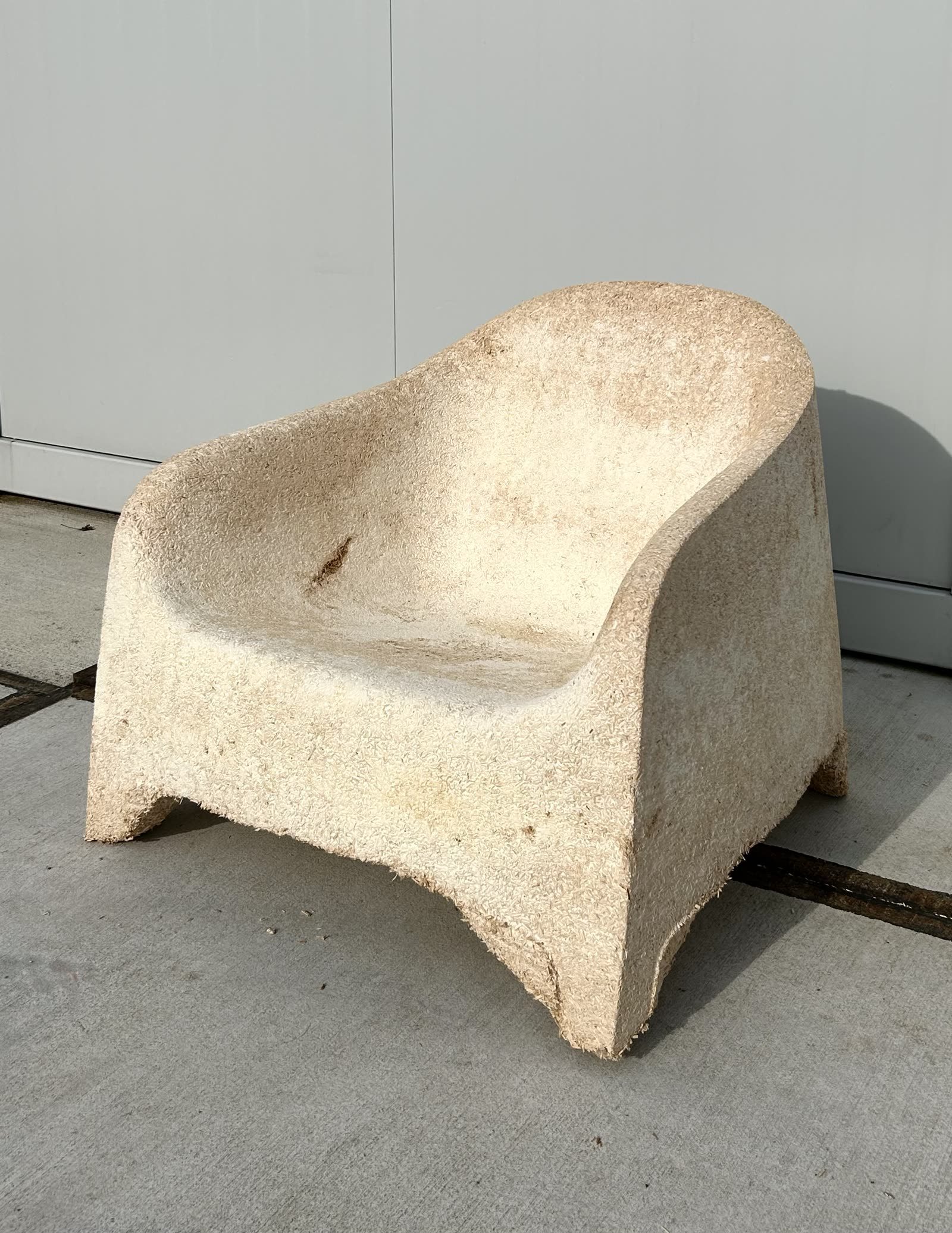
Grown
Mycelium cultivated inside proprietary moulds over a controlled growth cycle, then heat-stabilised into a finished form. Produces distinctive surface texture and complex three-dimensional form factors.
Used in: Acoustic panels, architectural surface.
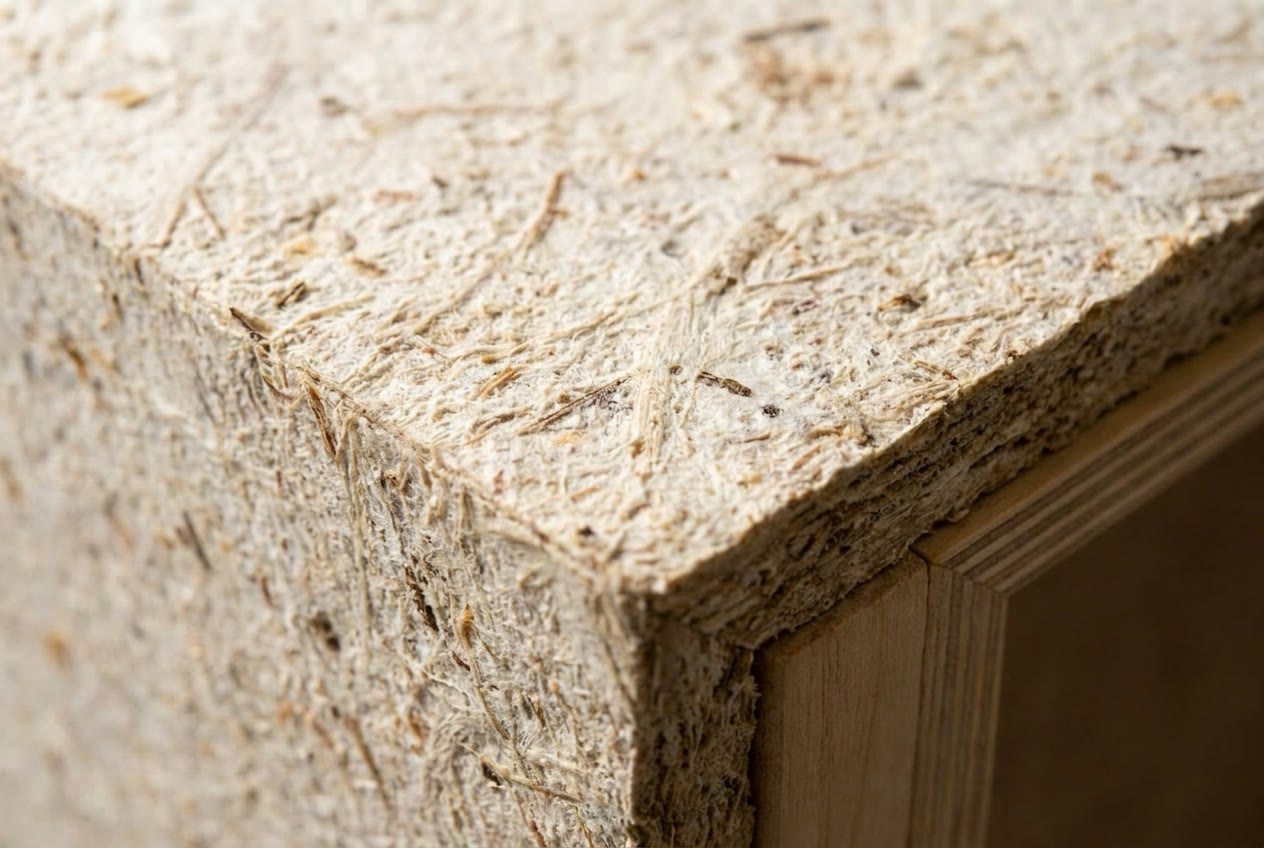
Pressed
Spent mycelium biomass shredded and heat-pressed directly into flat board formats. Minutes of press time rather than weeks of cultivation.
Used in: Event structures, temporary architecture, pressed board applications.
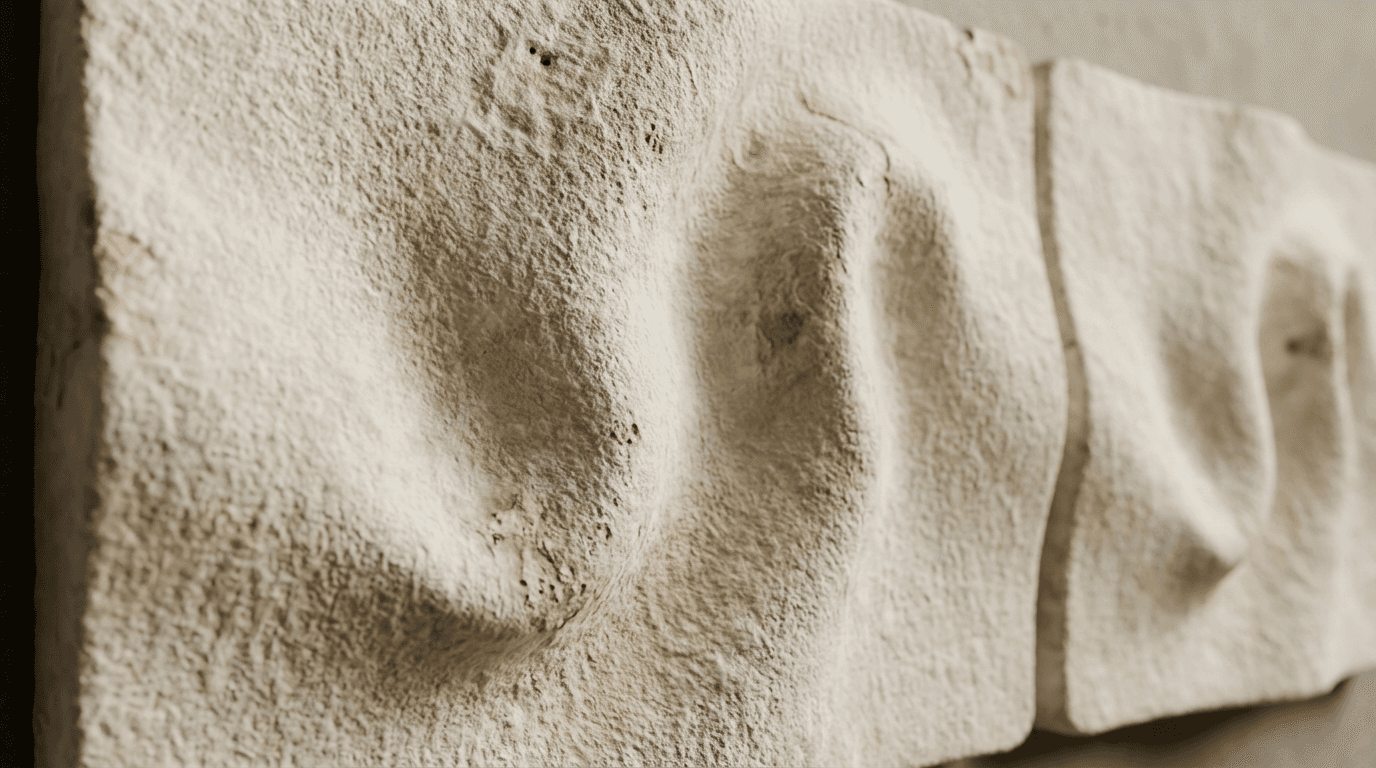
Product — FOLD
Surface design in collaboration with NYXO Design Studio.
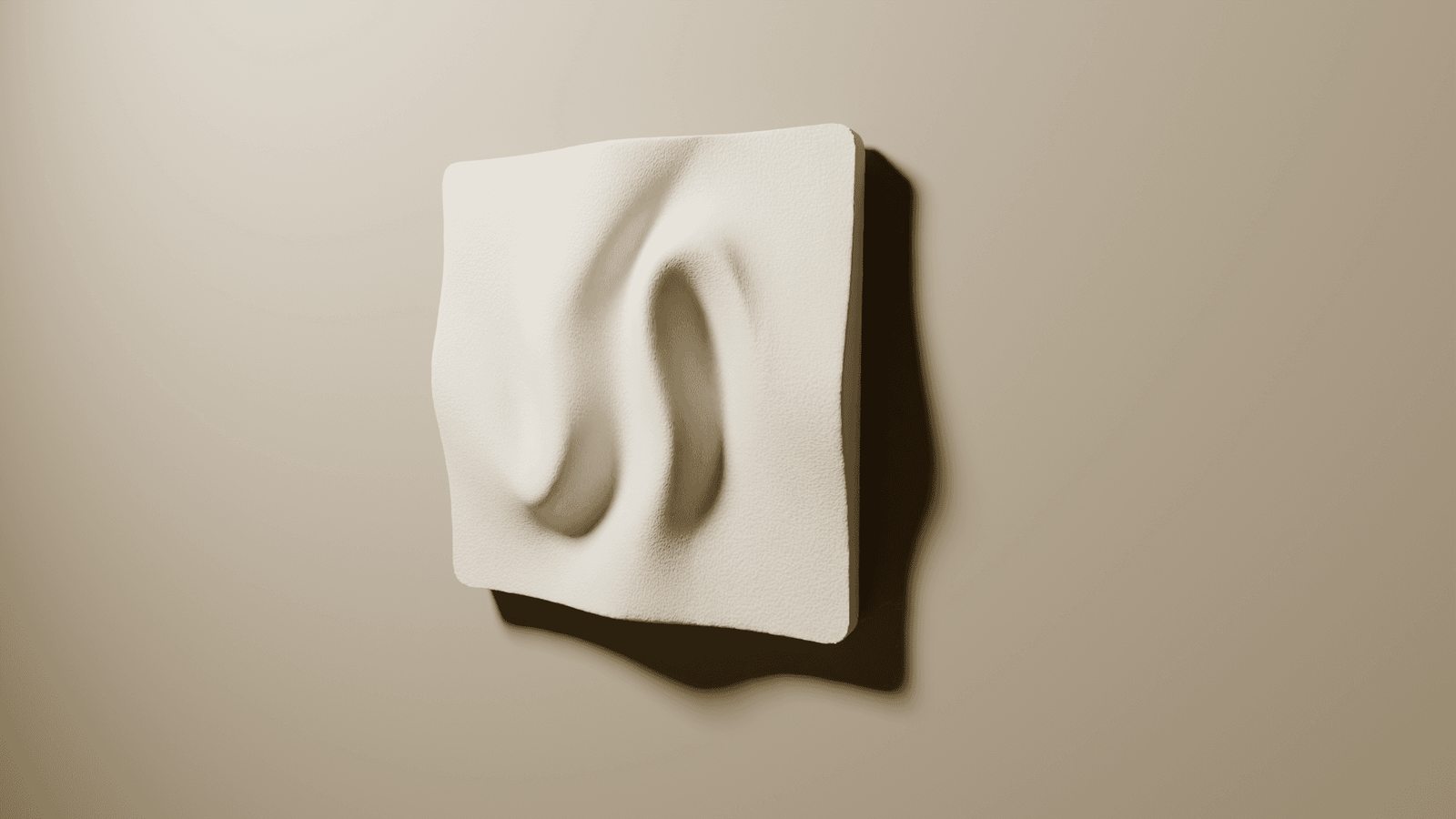
FOLD is NUMU's first product — a modular acoustic panel system grown from bio-based material and designed for interior architecture. It translates the material platform into a real, specification-ready object: tactile, scalable, and visually distinctive.
Fold takes its name from the forces that shape it — the movement of fabric, the softness of drapery, the way wind carves form into sand and dunes. Each panel surface carries that memory: a topography grown into material rather than cut from it.
The material system, manufacturing process, and engineering are NUMU. The surface design pattern is co-developed with NYXO Design Studio.
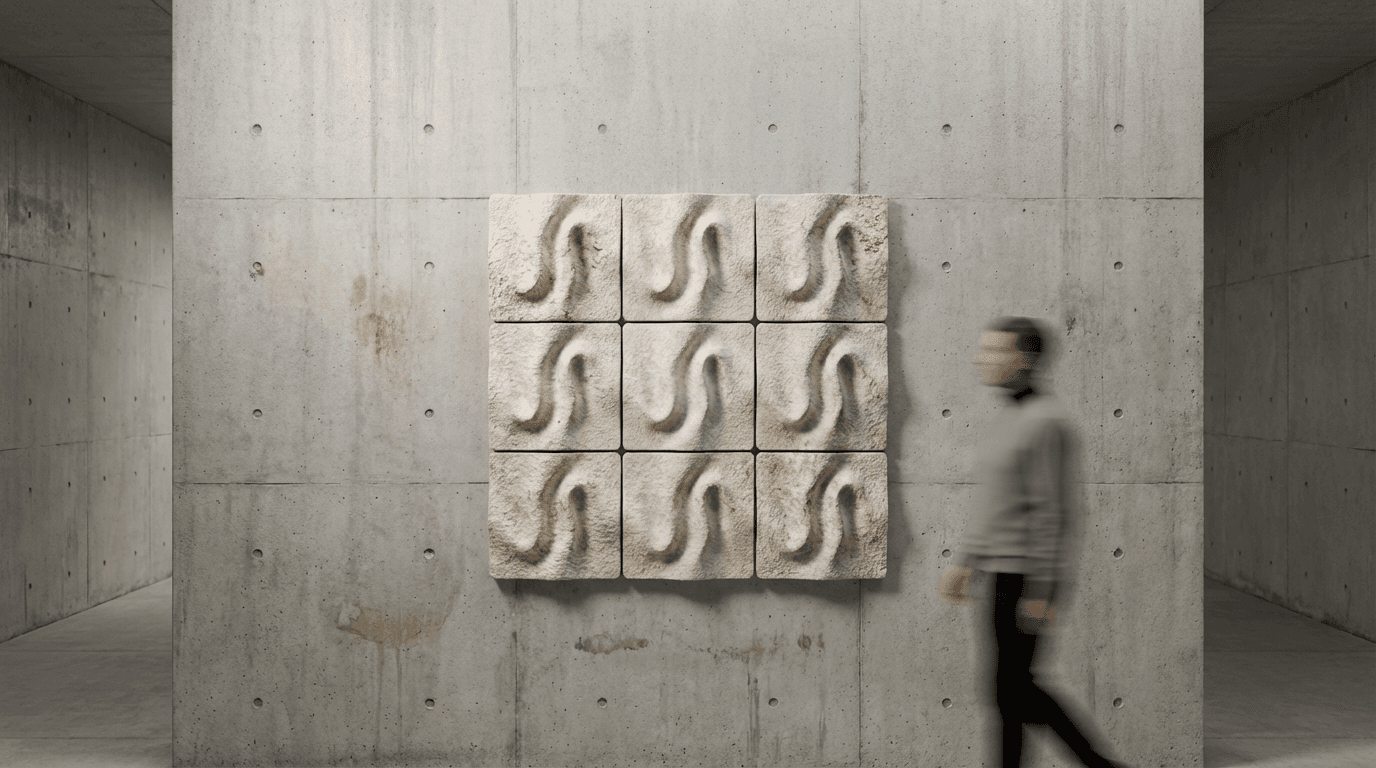
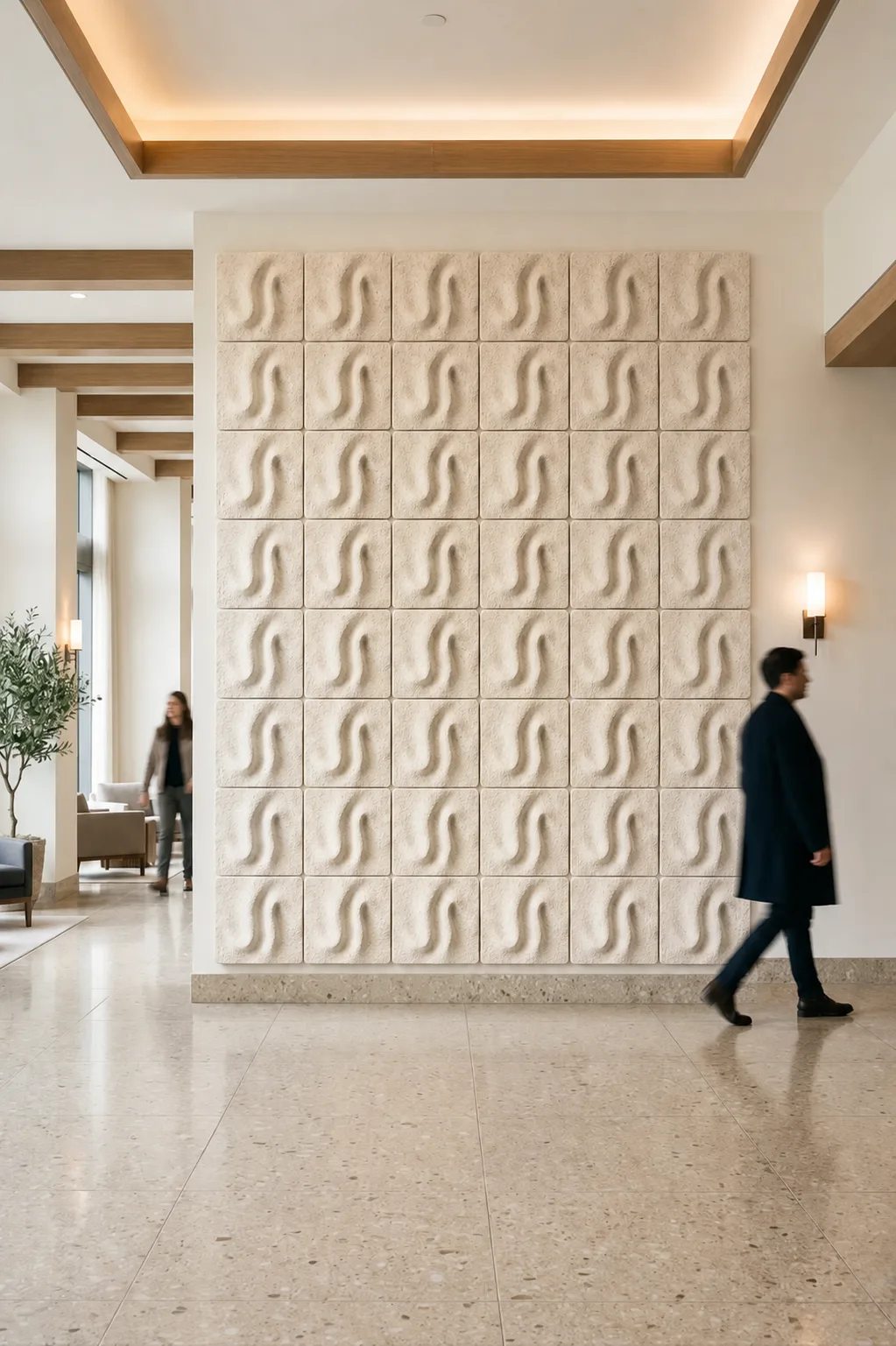
Render — Urban concrete installation, 3×3 grid module
Render — Urban concrete installation, variation
Technical specifications
Panel dimensions
400 × 400 mm module, 60 mm nominal (provisional)
Weight
Confirmed with samples
Acoustic performance
NRC 0.72–0.80 — design target, testing in progress
Fire performance
ASTM E84 Class B — design target, testing in progress
Installation
Concealed adhesive mount or mechanical fixing
Finish
Natural PALMYCO™ surface, raw or sealed
Lead time
Quoted per project
Origin
Manufactured in Dubai, UAE
End of life
Bio-based material; end-of-life route confirmed for the chosen finish
Objects & editions
Board gifts, delegate mementos, long-service and milestone pieces. Unusual forms grown in repeat batches, with considered engraving and presentation boxes.
Explore triangular desk pieces, ring awards, vessels and event collateral, all developed around the PALMYCO material system.
Explore objects & editions ↗Discuss a commission ↗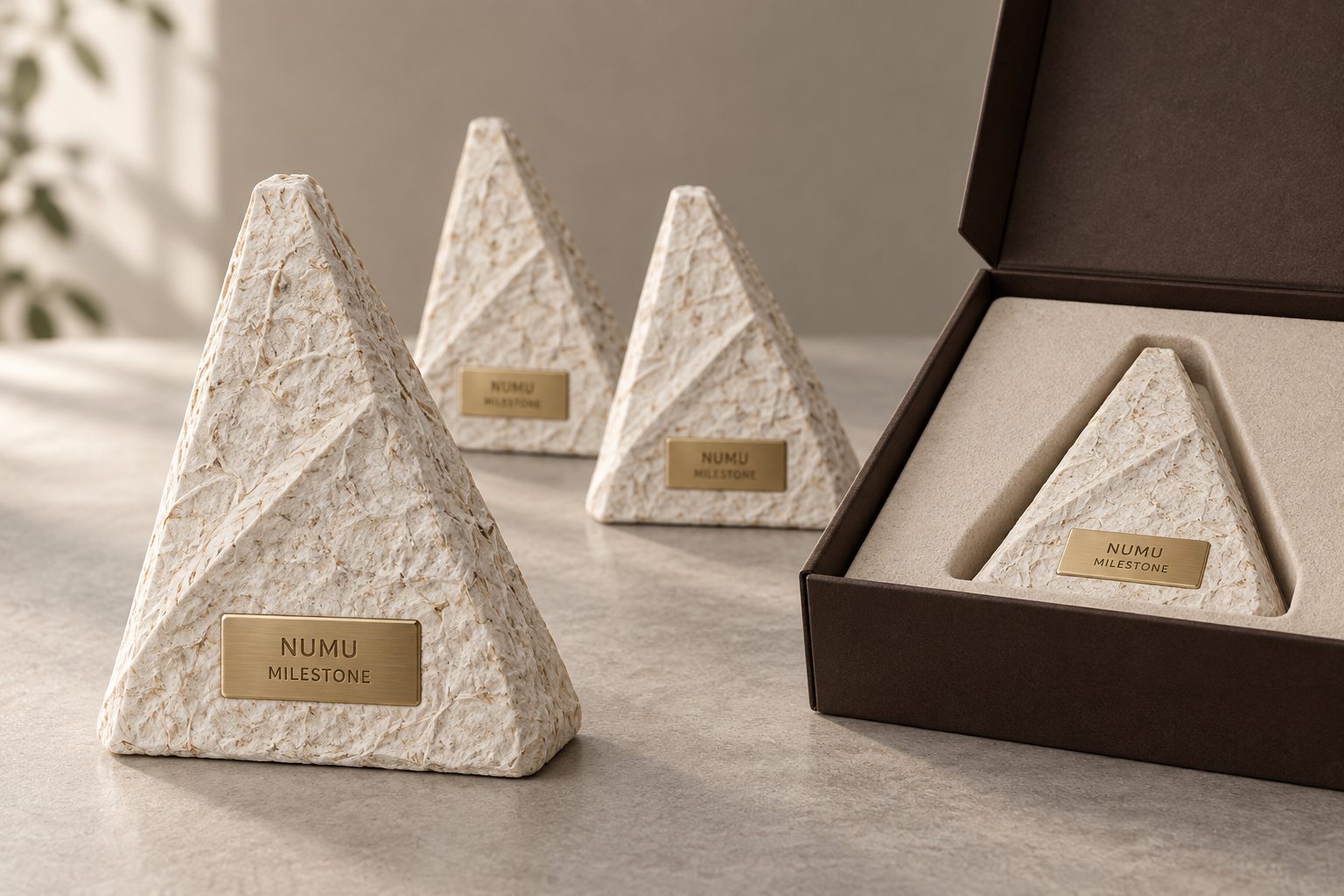
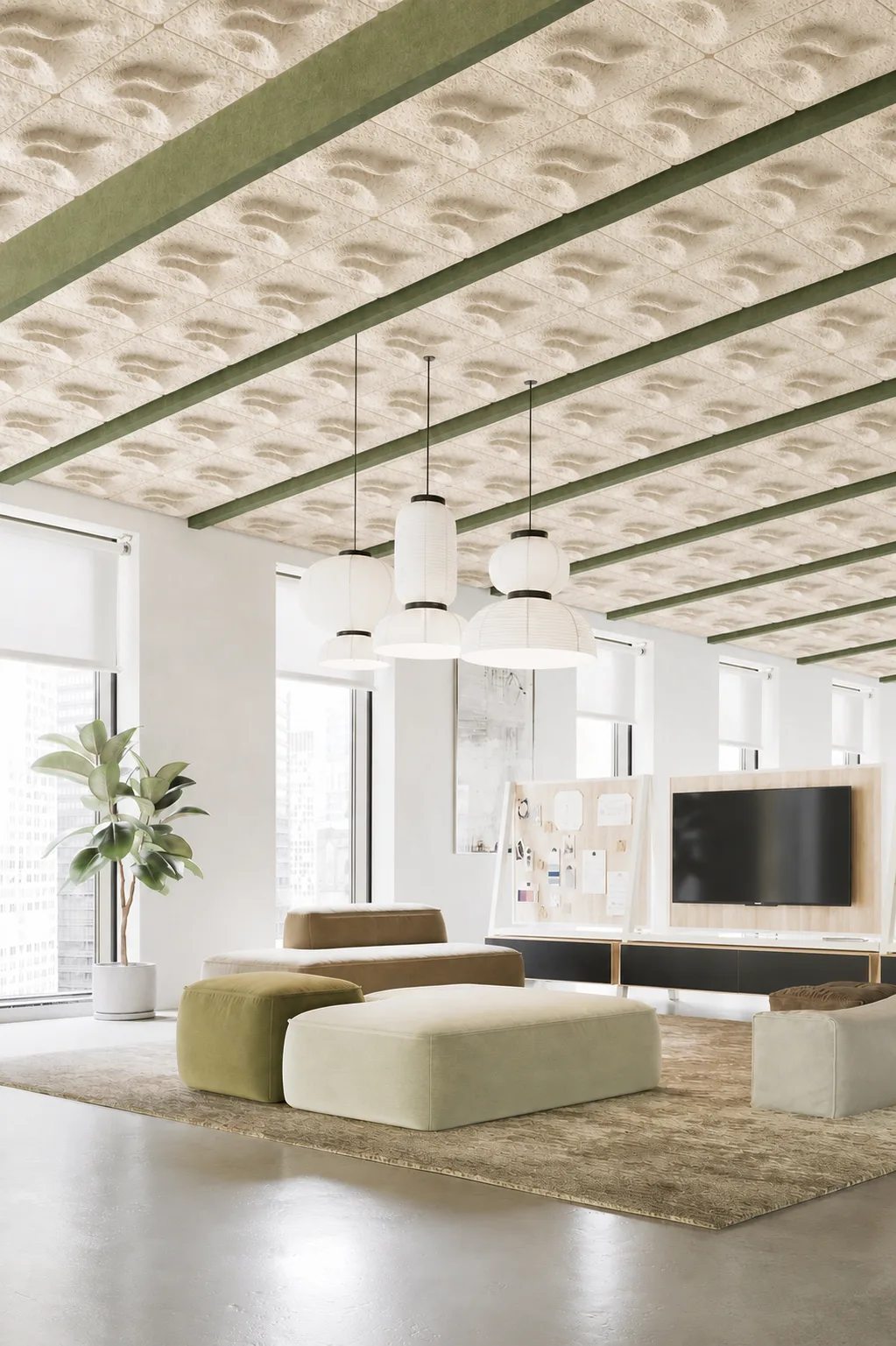
Spatial applications
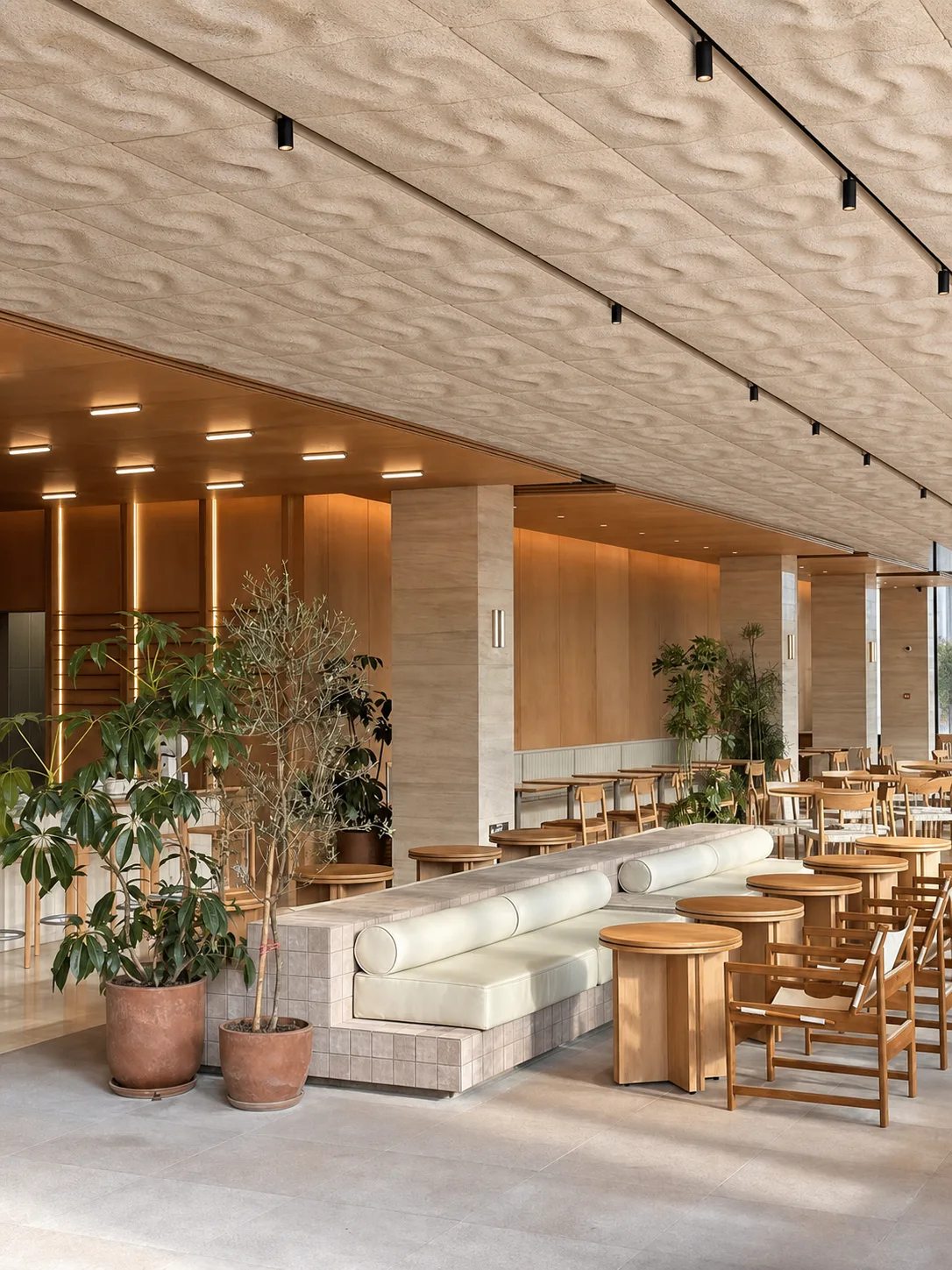
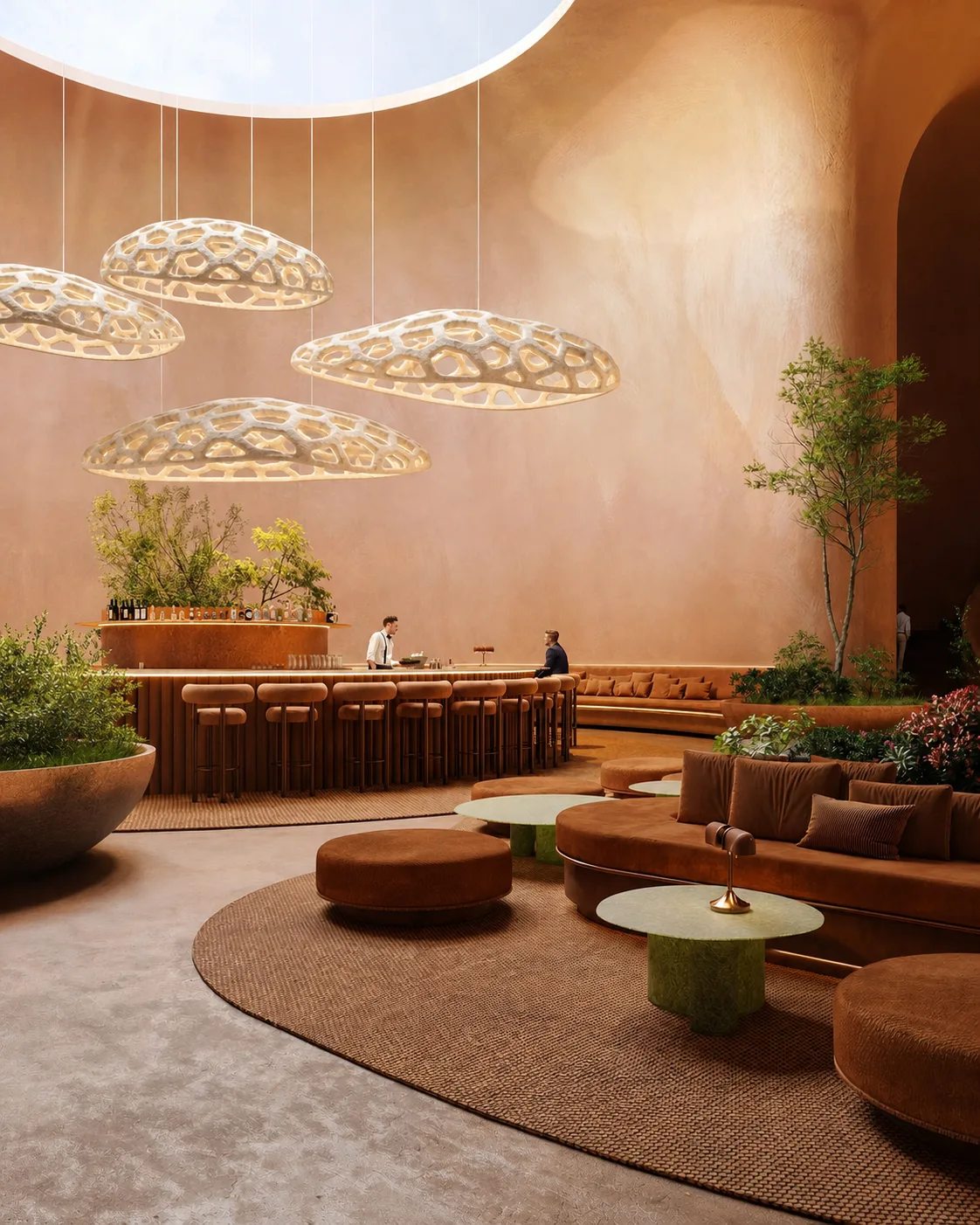
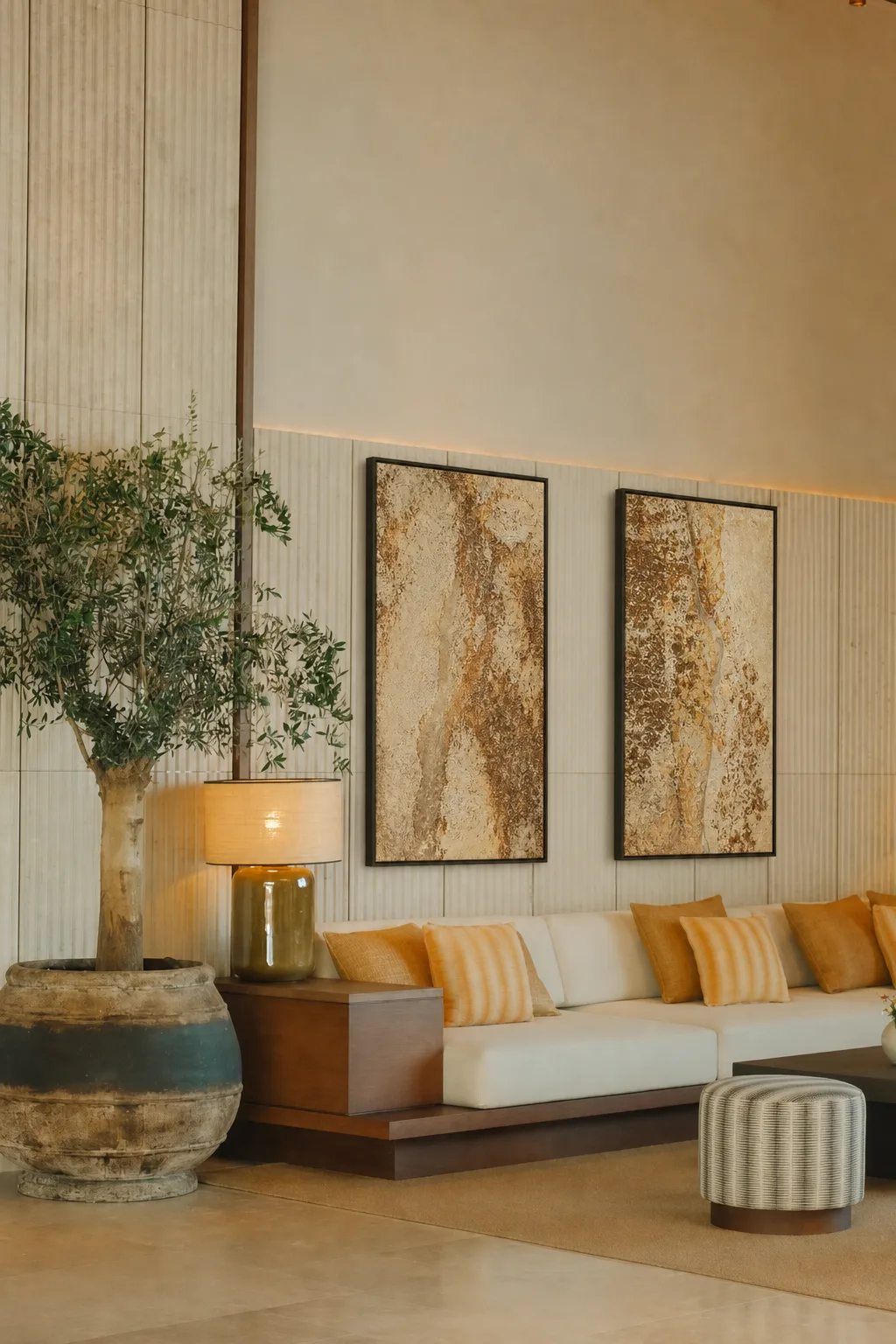
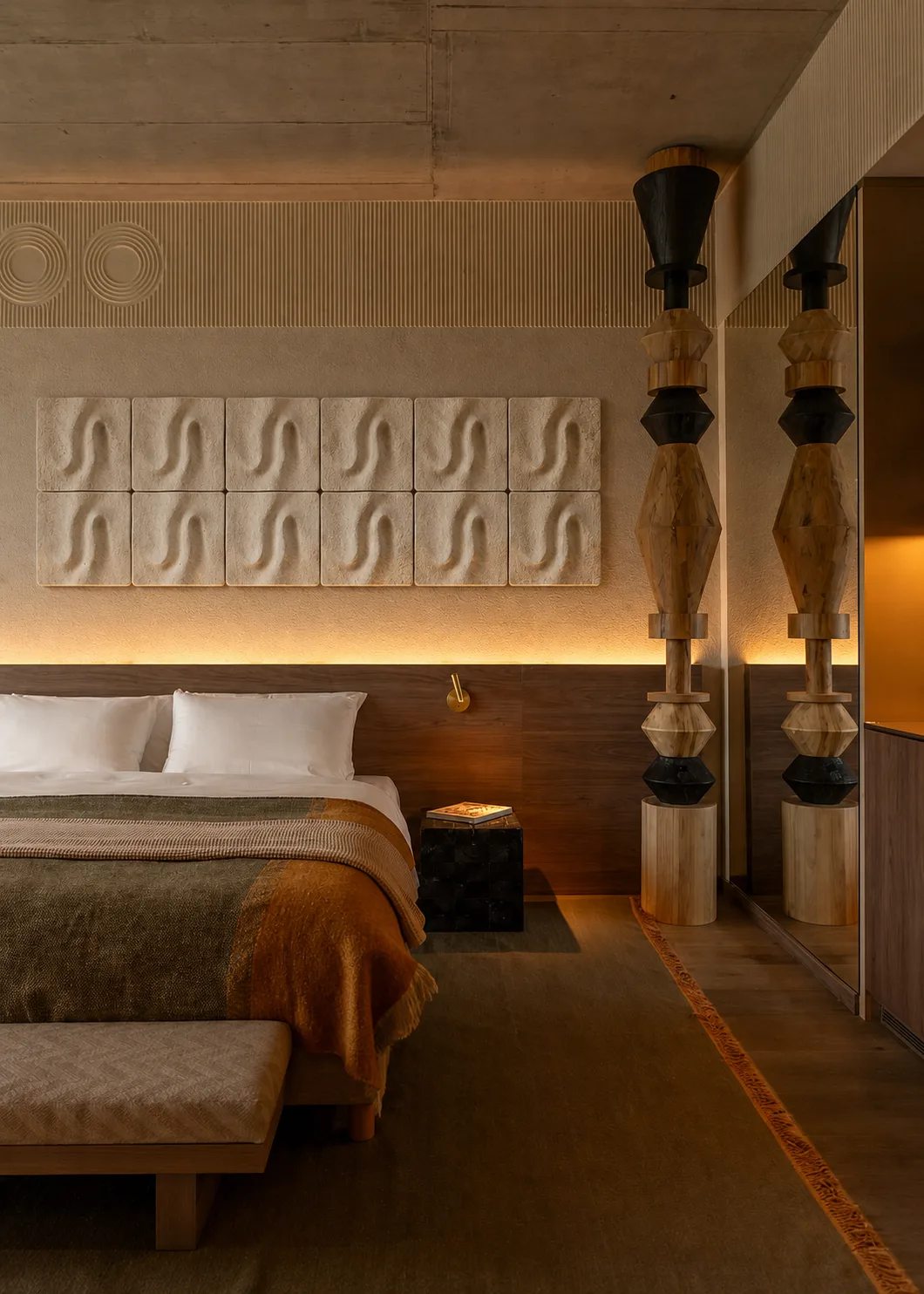
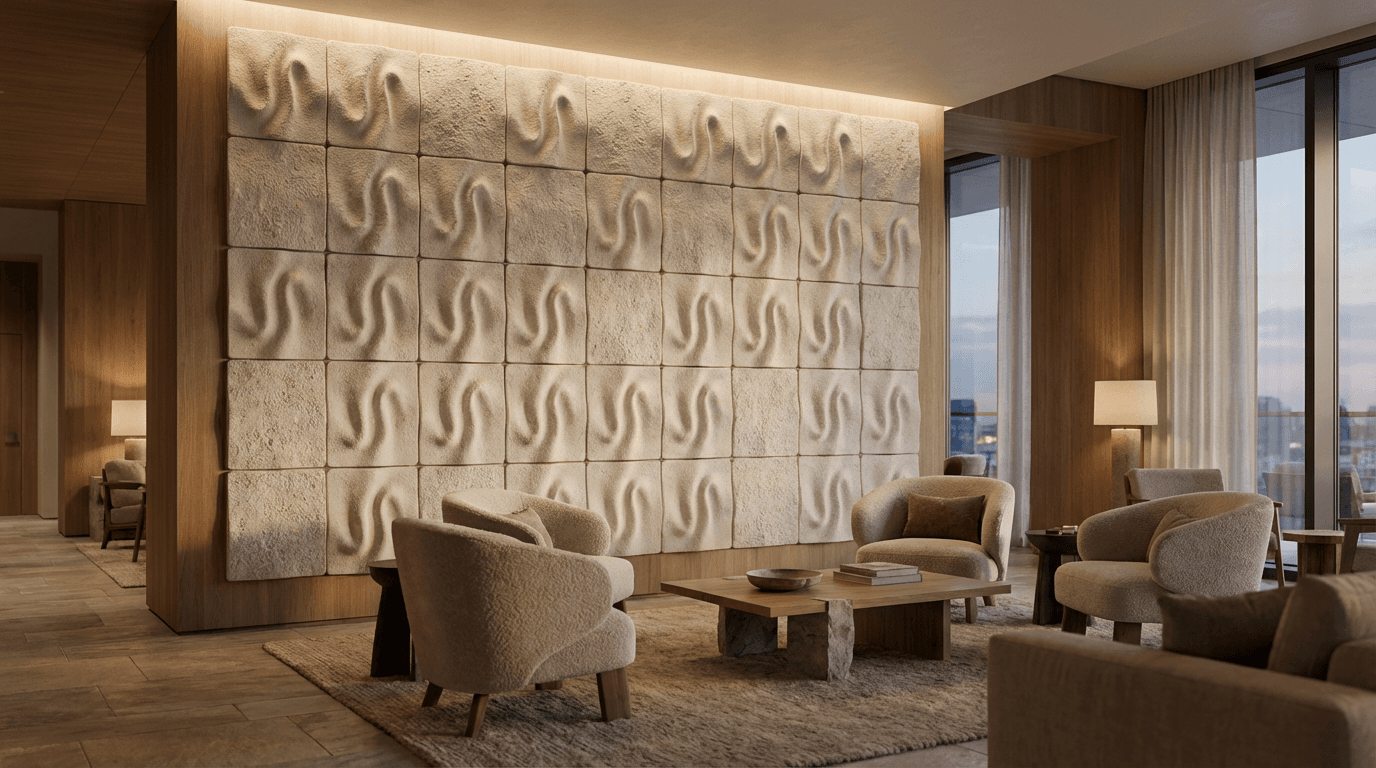
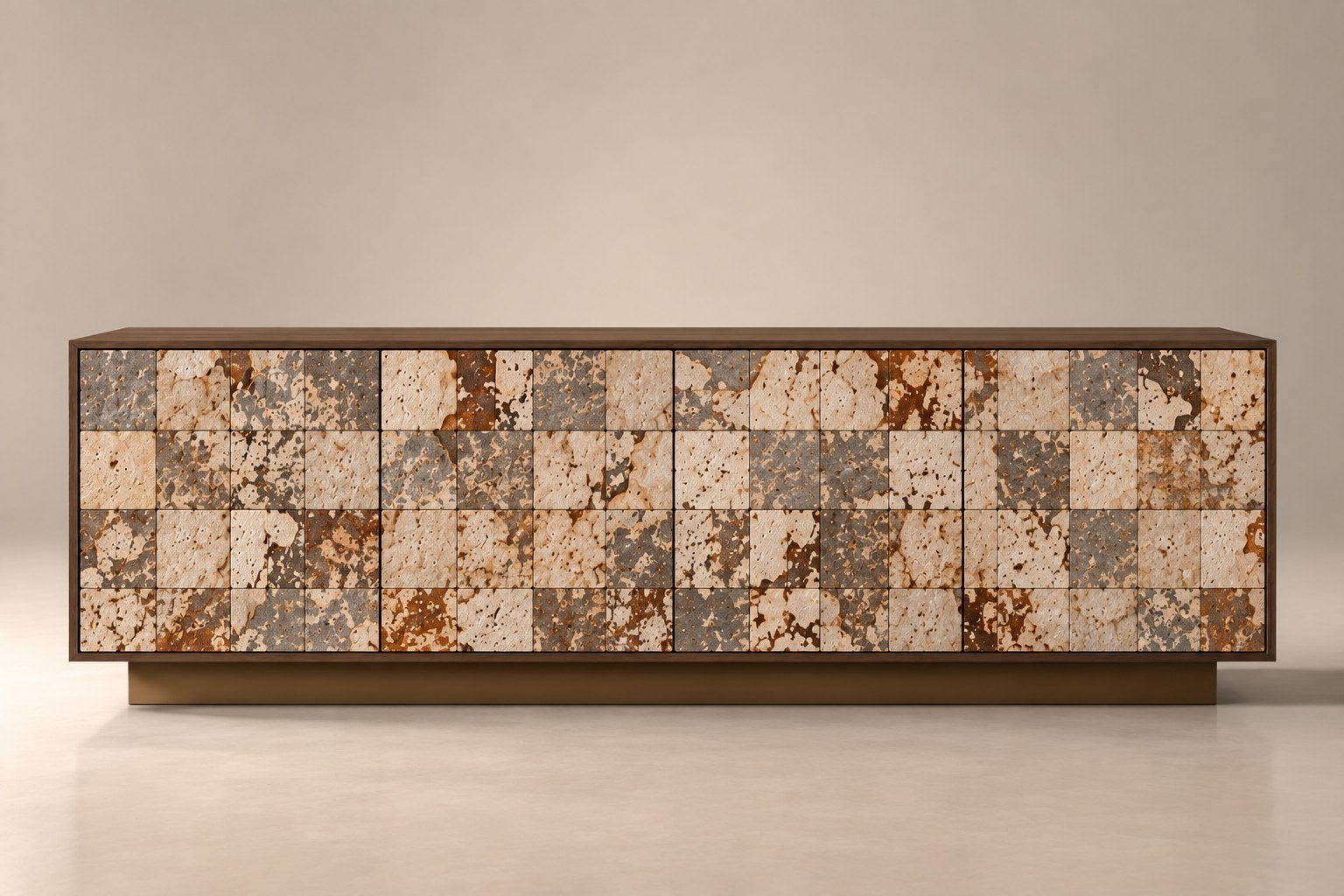
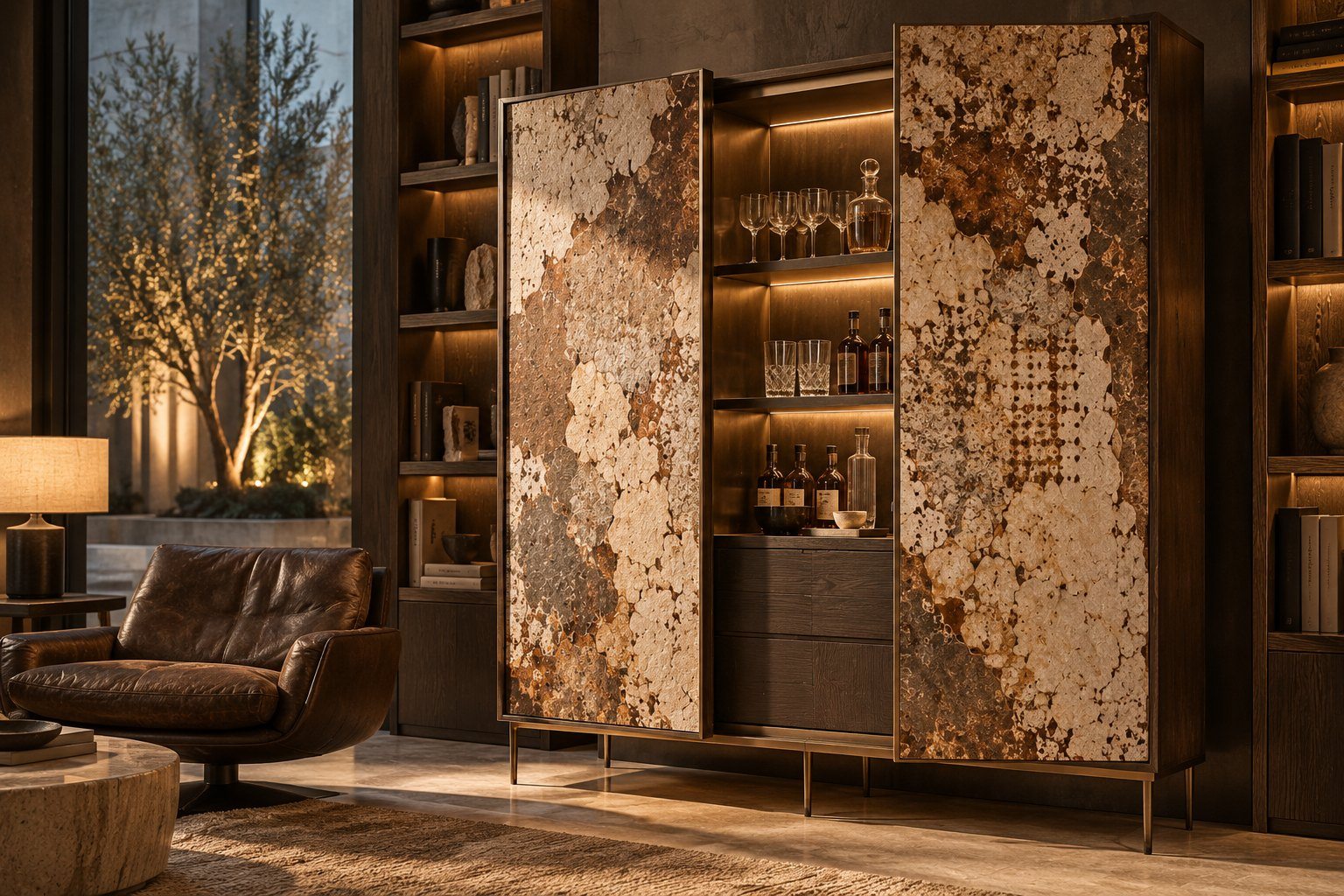
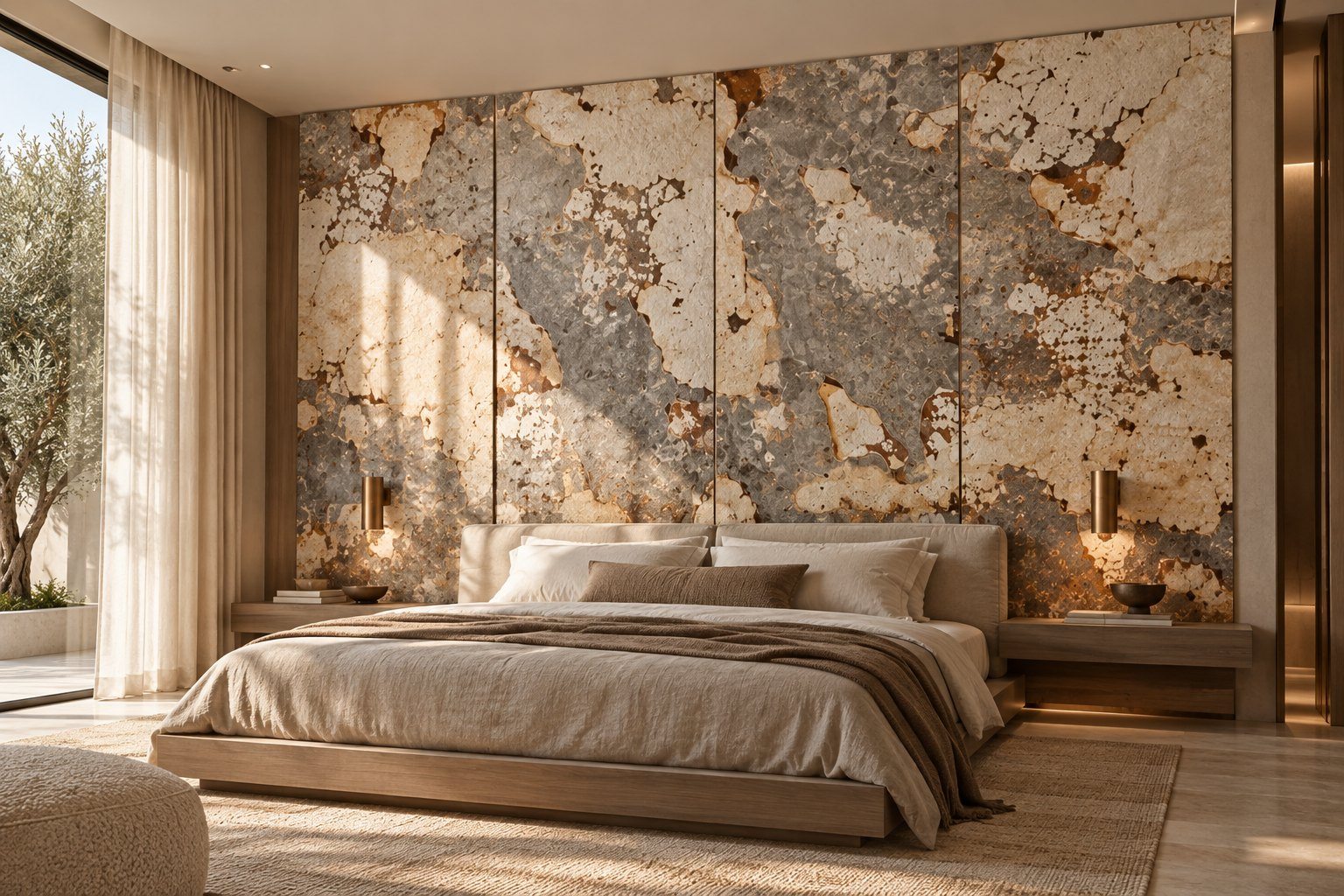
Three material-led directions for hospitality, workplace and furniture. Visualisations are indicative of application, not completed installations.
Hospitality
Warm, tactile interiors where acoustic surface, lighting, and material character create a memorable guest experience.
Workplace
Biobased acoustic elements give offices visual warmth and a more considered sense of focus, from shared rooms to open-plan ceilings.
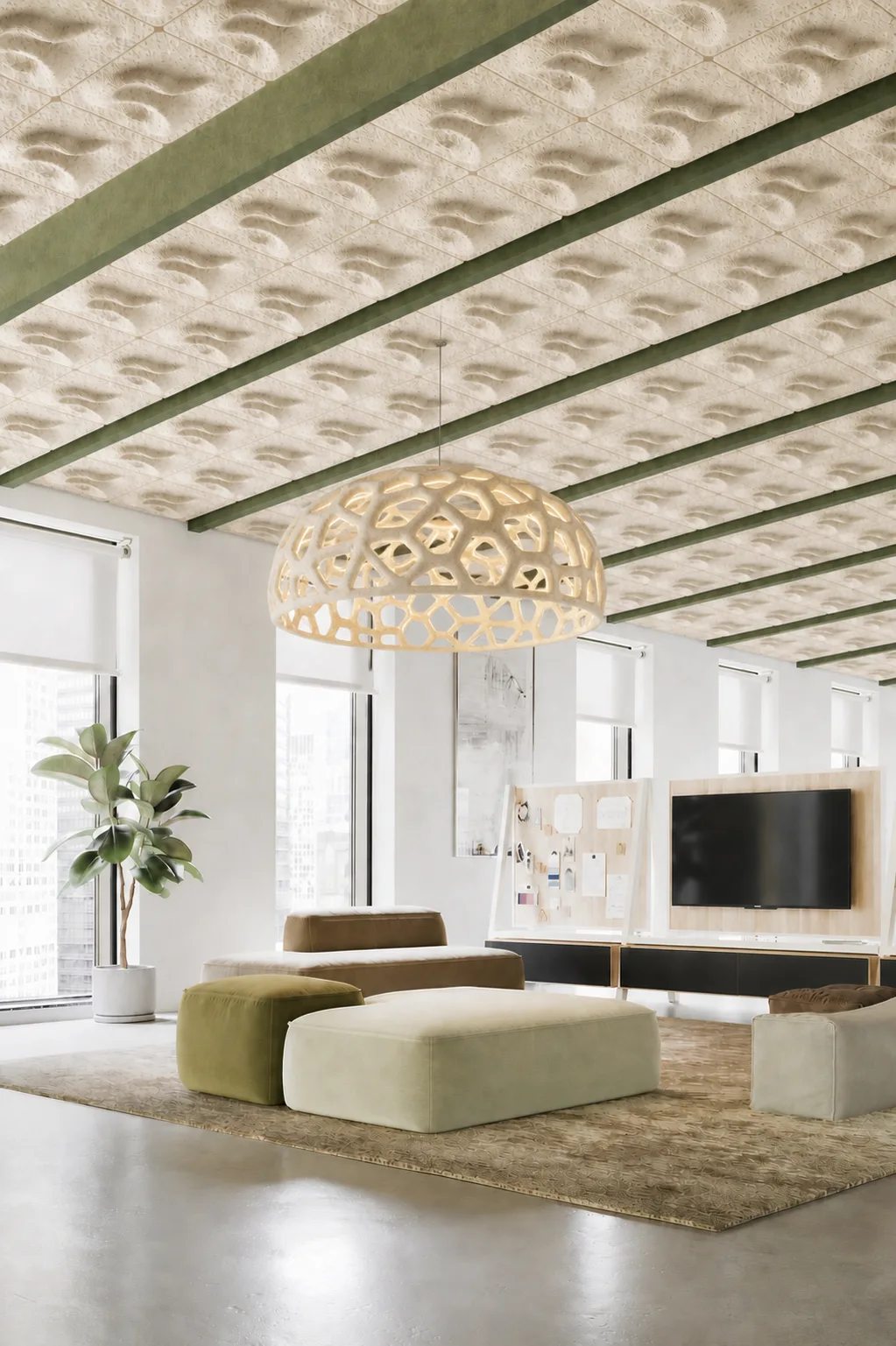
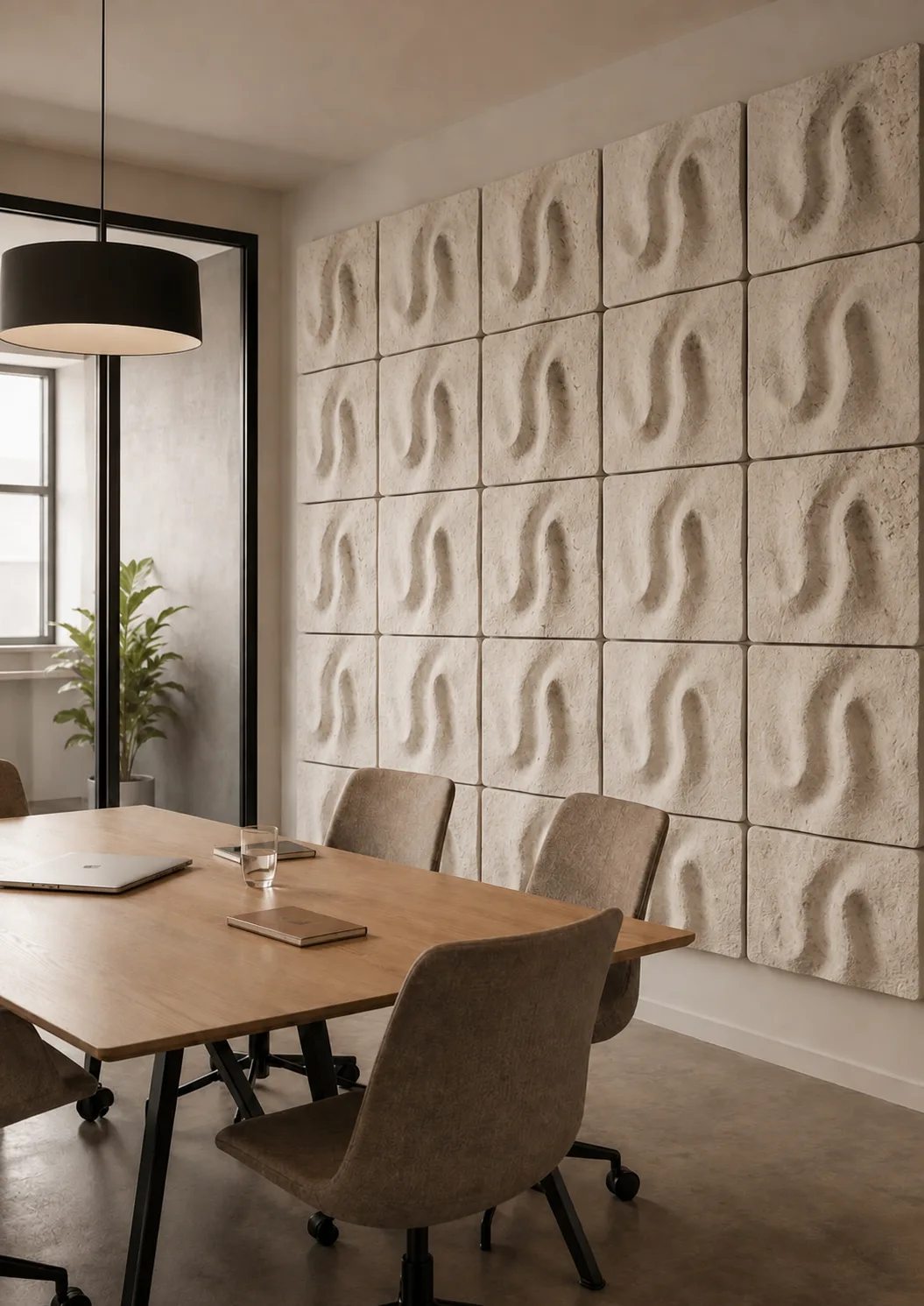
Furniture & cladding
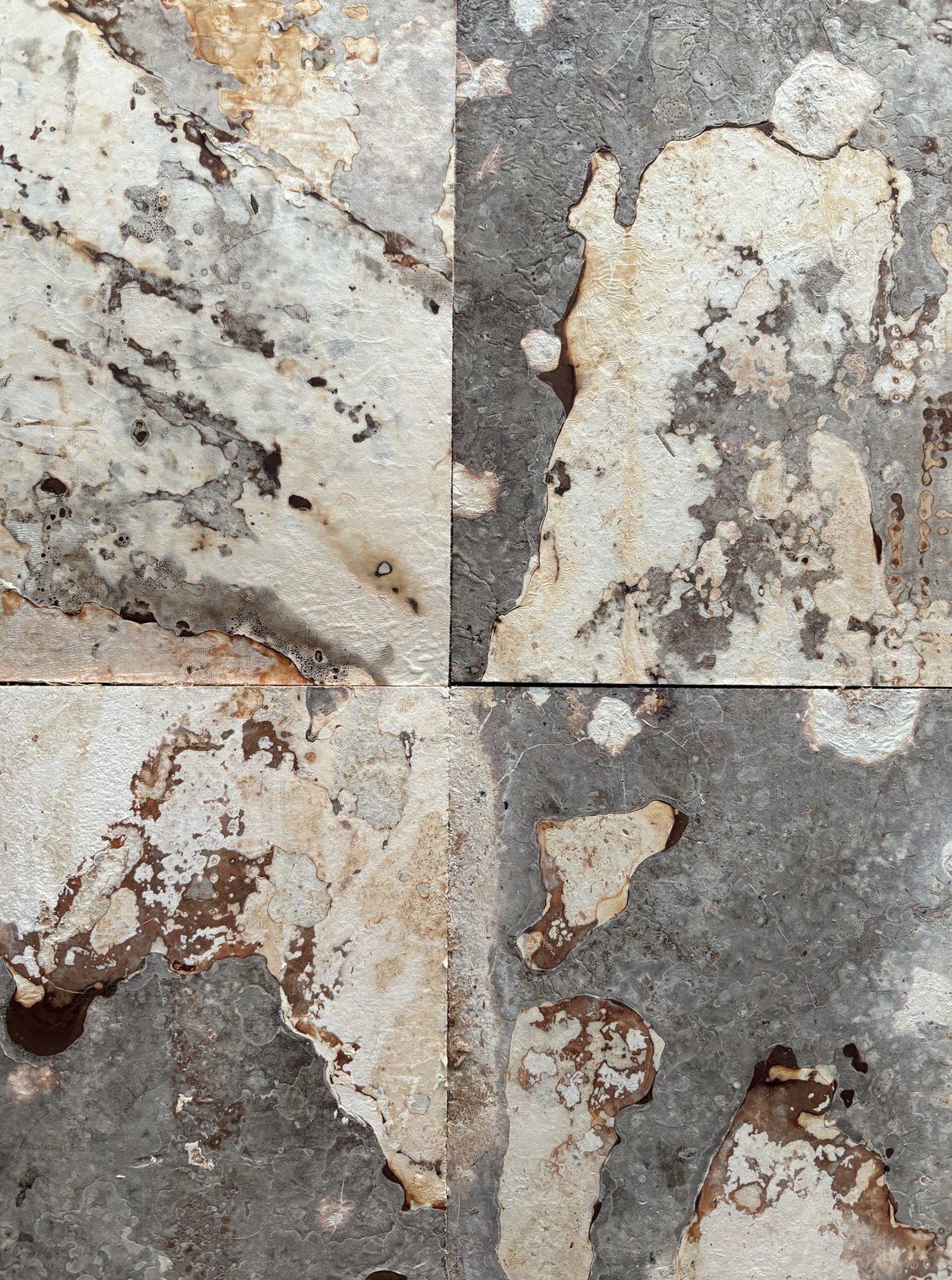
Grown veneer, a technique developed in house: plates, 20 × 20 cm tiles or sizes cut to the drawing, set into walnut and oak furniture or run across a wall. Visualisation studies of the exclusive collection.
03 — Built work
A completed installation in the Netherlands, and full-scale material work grown in NUMU's Dubai lab. Prototypes are shown as prototypes; visualisations elsewhere on this site are labelled as such.
Netherlands — 2022 · Completed
Beyond Chrysant
Prototype installation demonstrating the folded acoustic language in a built exhibition context.
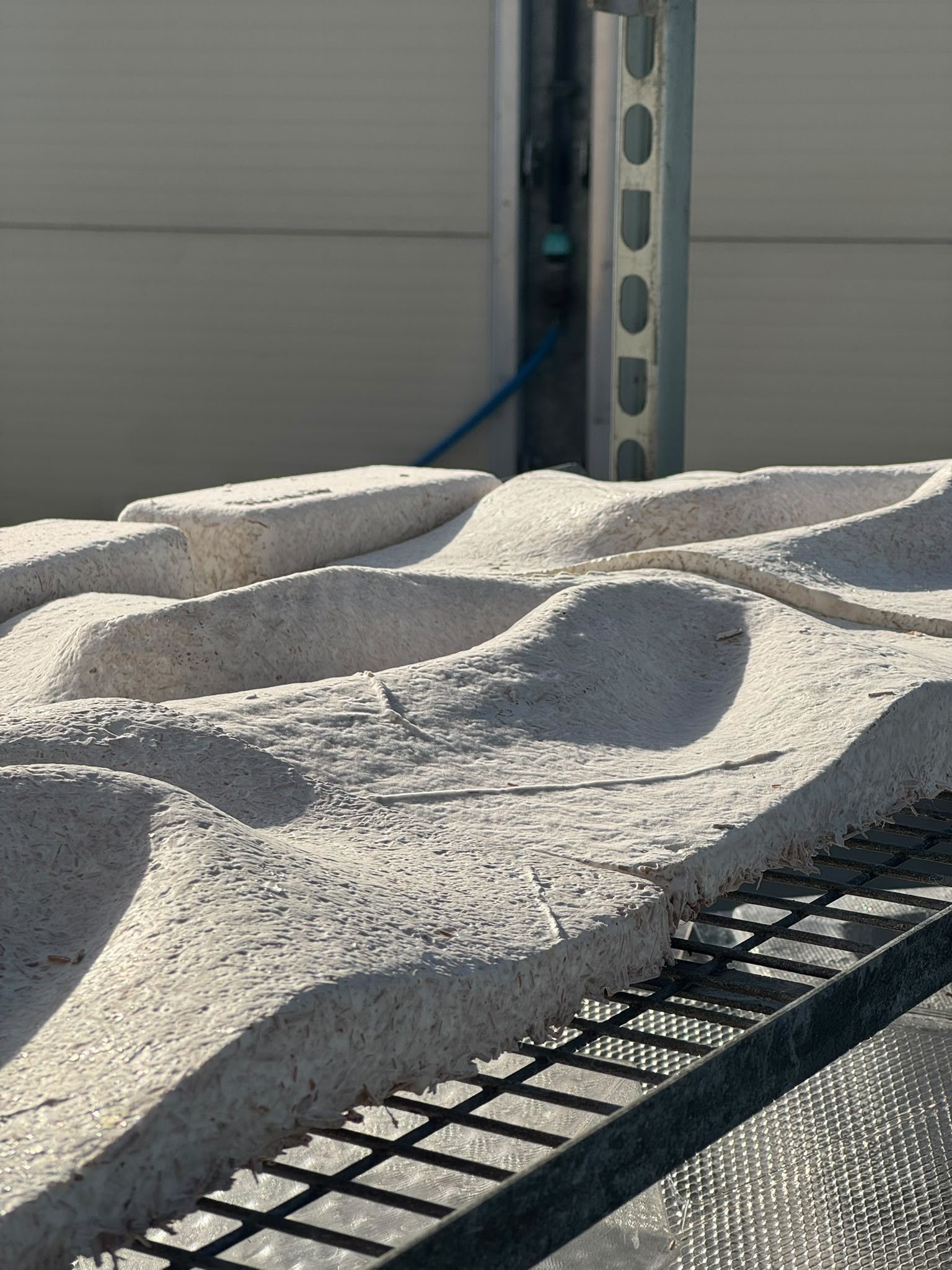
Dubai, UAE — 2026 · Prototype
FOLD panels
Full-scale FOLD panels grown and finished in the Dubai lab. Acoustic and fire testing is in progress; performance figures remain design targets until reports are issued.
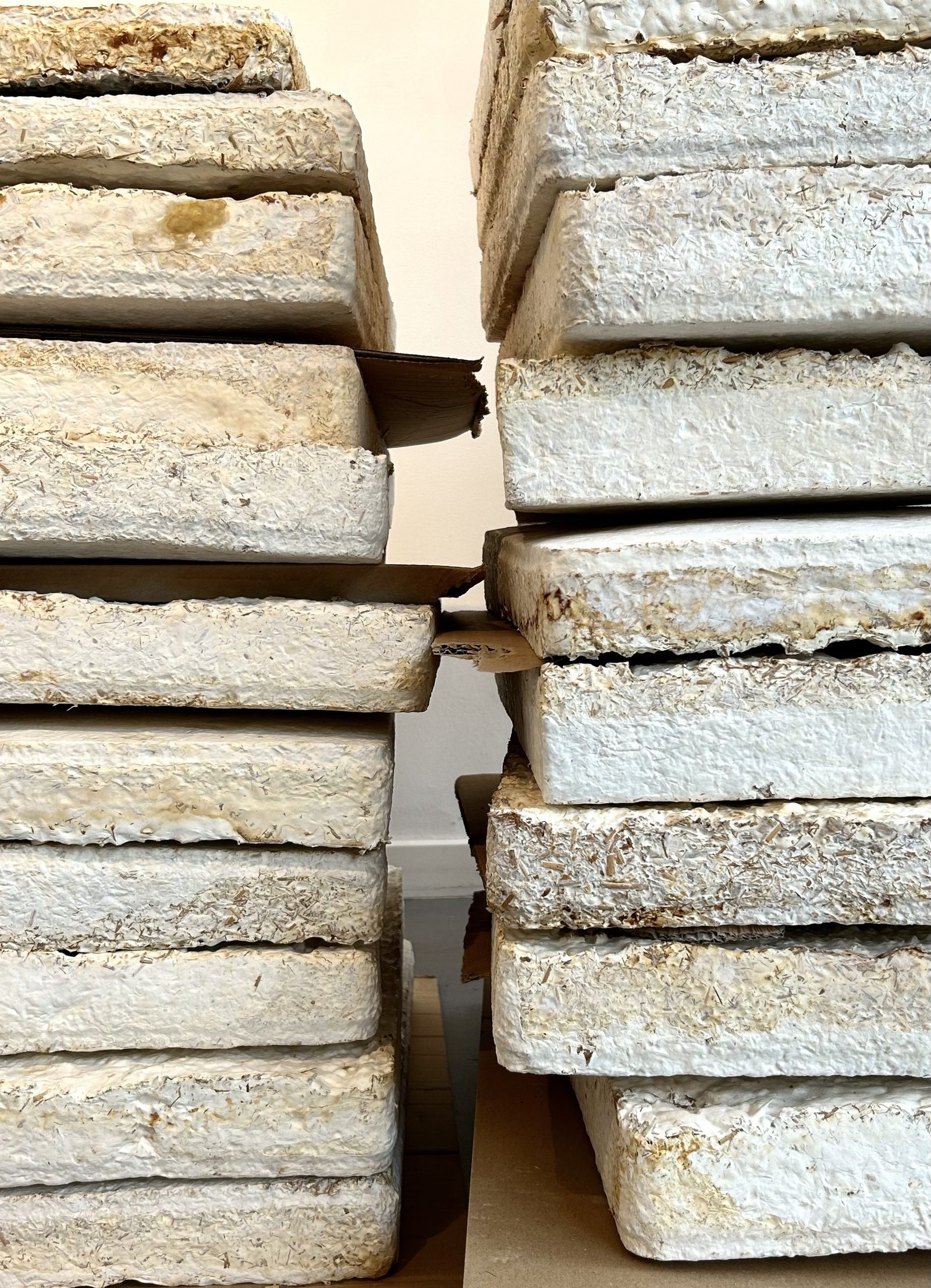
Dubai, UAE — Ongoing · Production
PALMYCO™ batches
Repeat growth cycles on regional palm fibre: the material base behind every panel, lamp and commission.
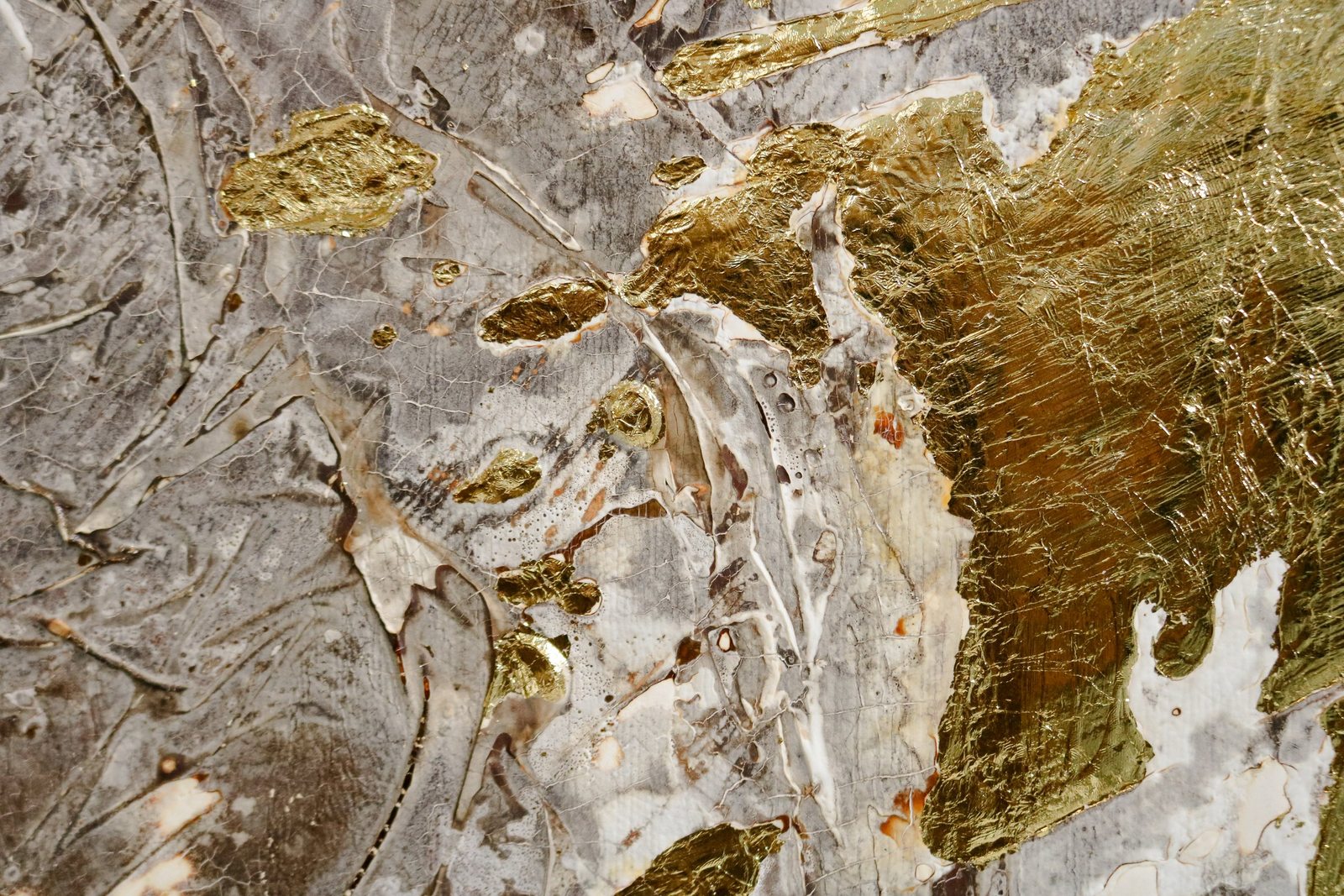
The collection — Objects & Surfaces
Acoustic surfaces, grown veneer furniture and cladding, Mushroomiya lighting, Fungal Art Series® works and bespoke commissions. Every piece is offered by inquiry, with price on request.
View the collection →Specify NUMU
Samples, specification sheets, and project conversations for architects, interior designers, and fit-out teams. Based in Dubai. Delivering regionally.
By submitting, you agree that NUMU may use your email to respond to this request in line with our Privacy Policy and Terms.
04 — Process
Fibers & regional crops
Processing & sorting
Inoculation & bonding
Moulding to specification
Built environment
Back to soil
Production
NUMU has run an active production lab in Dubai since 2025. Material is grown and pressed from regional agricultural waste — no imports, no synthetic resins.
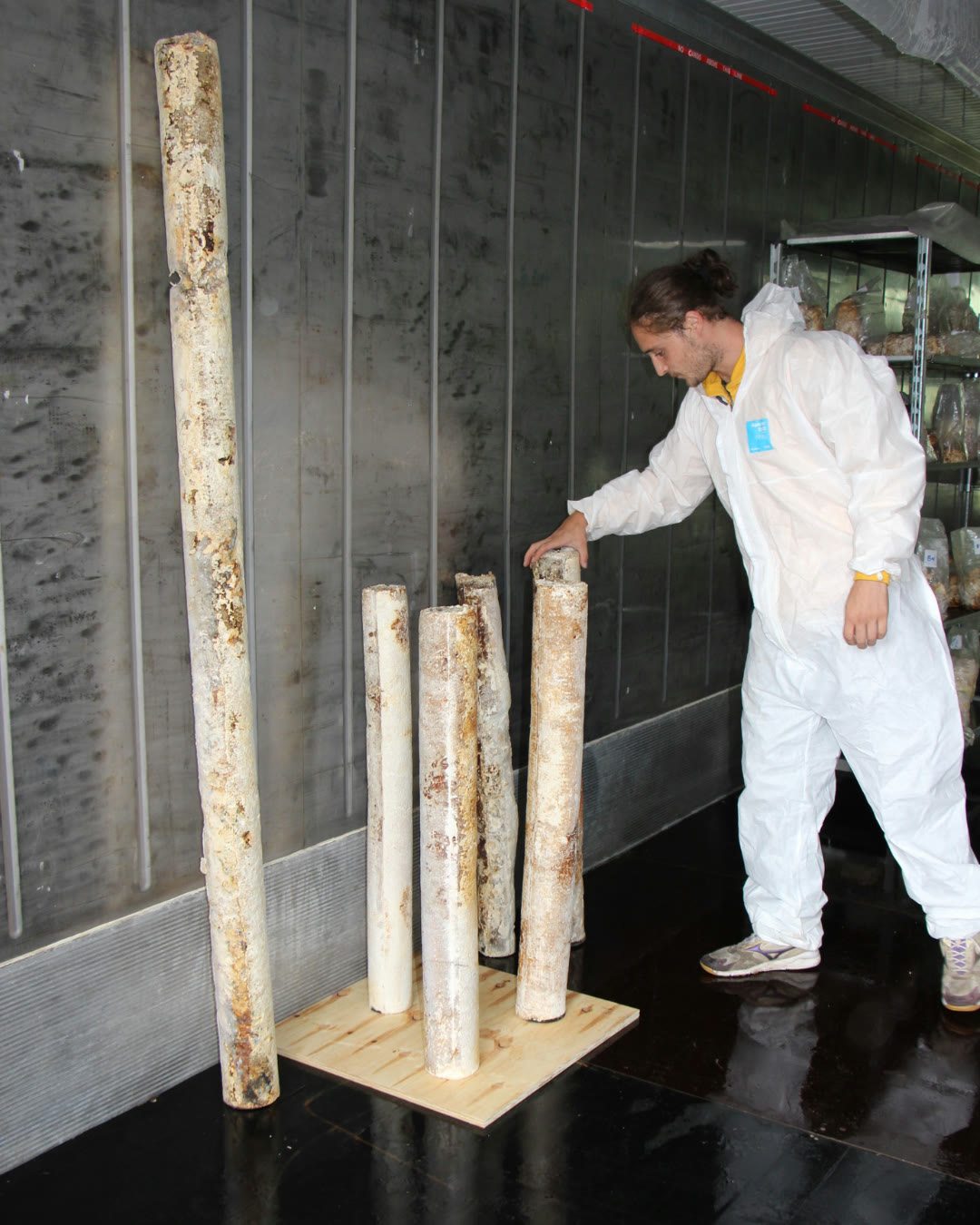
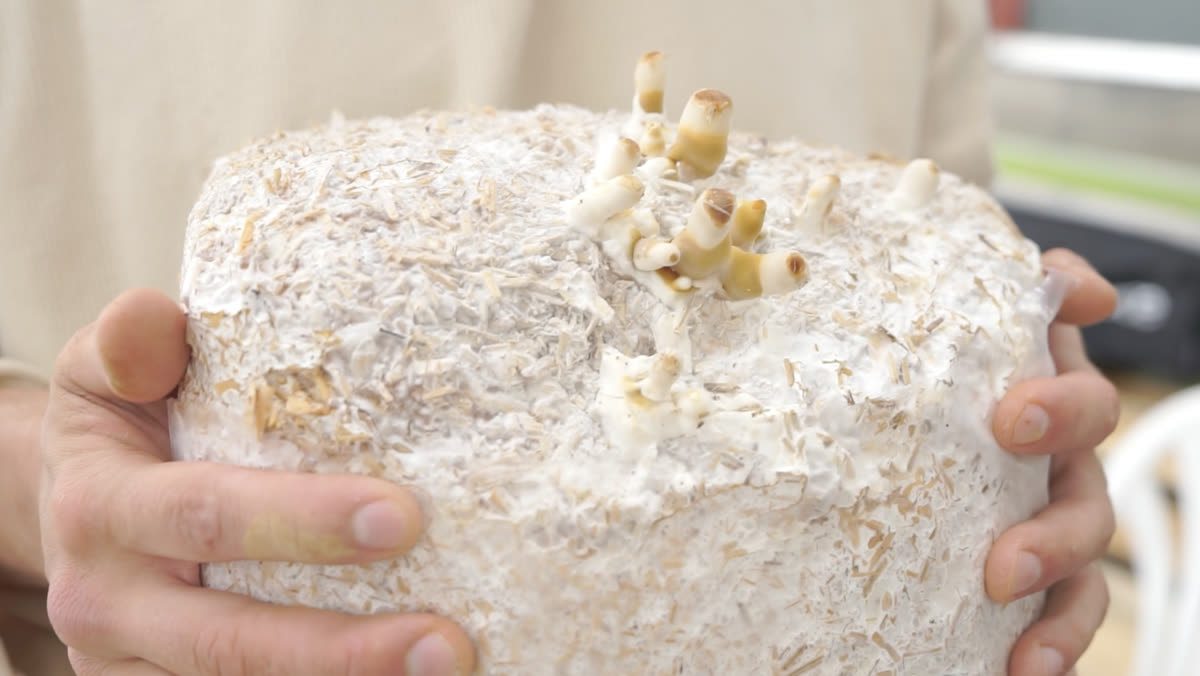
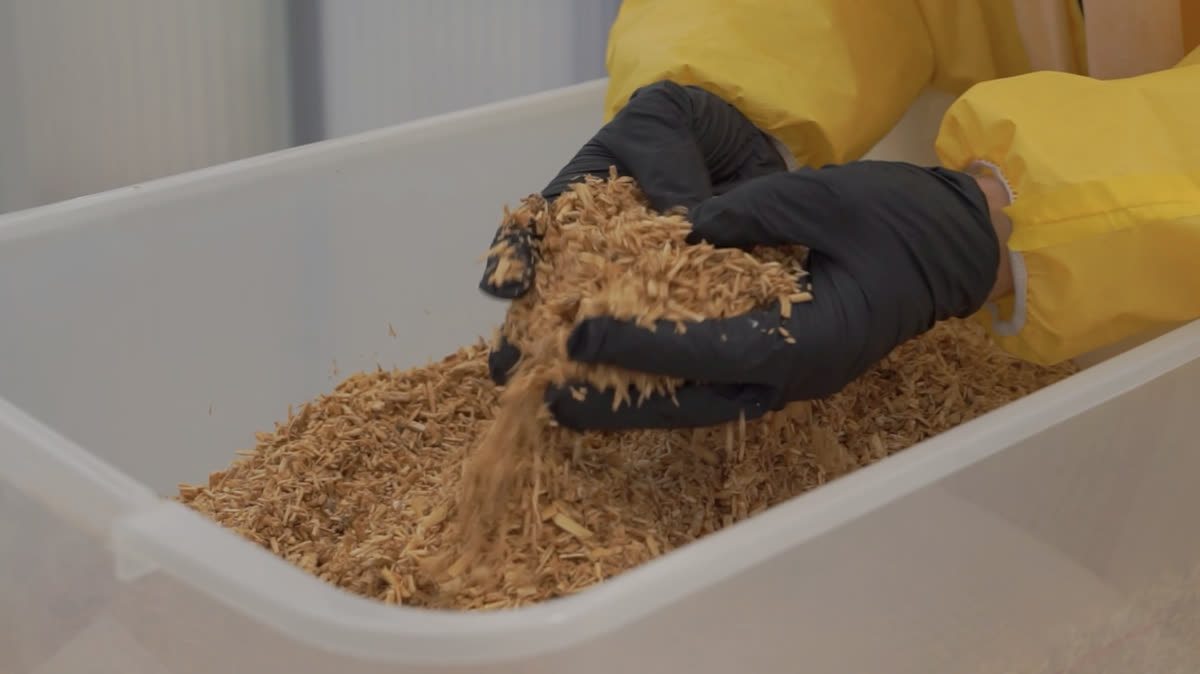
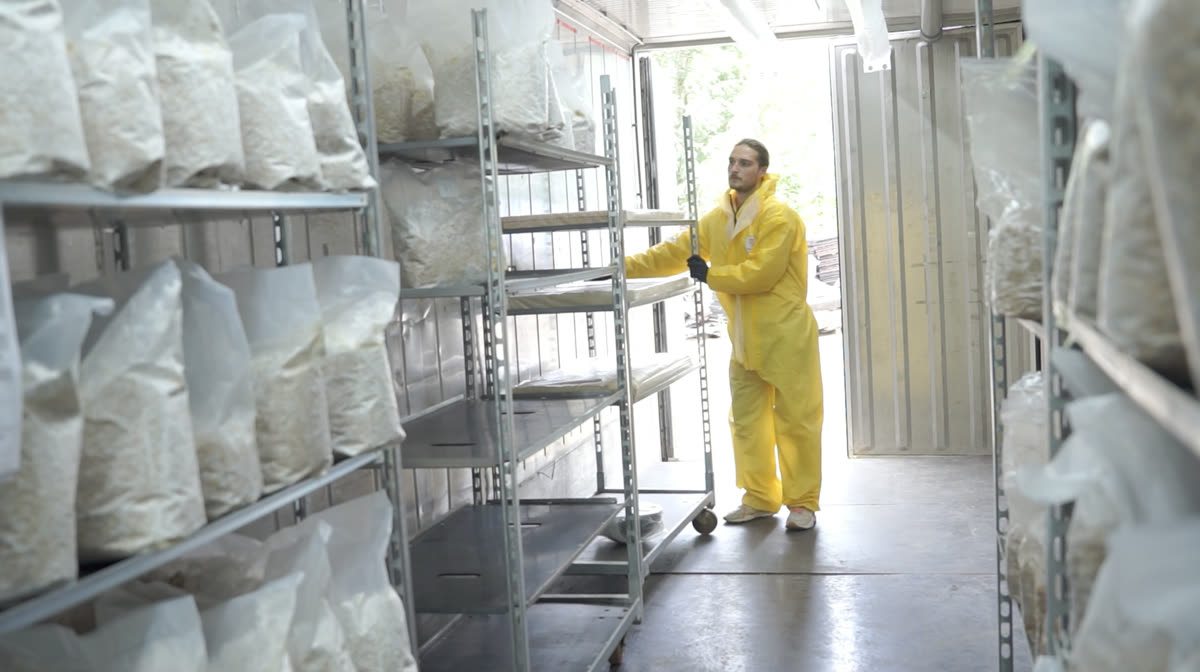
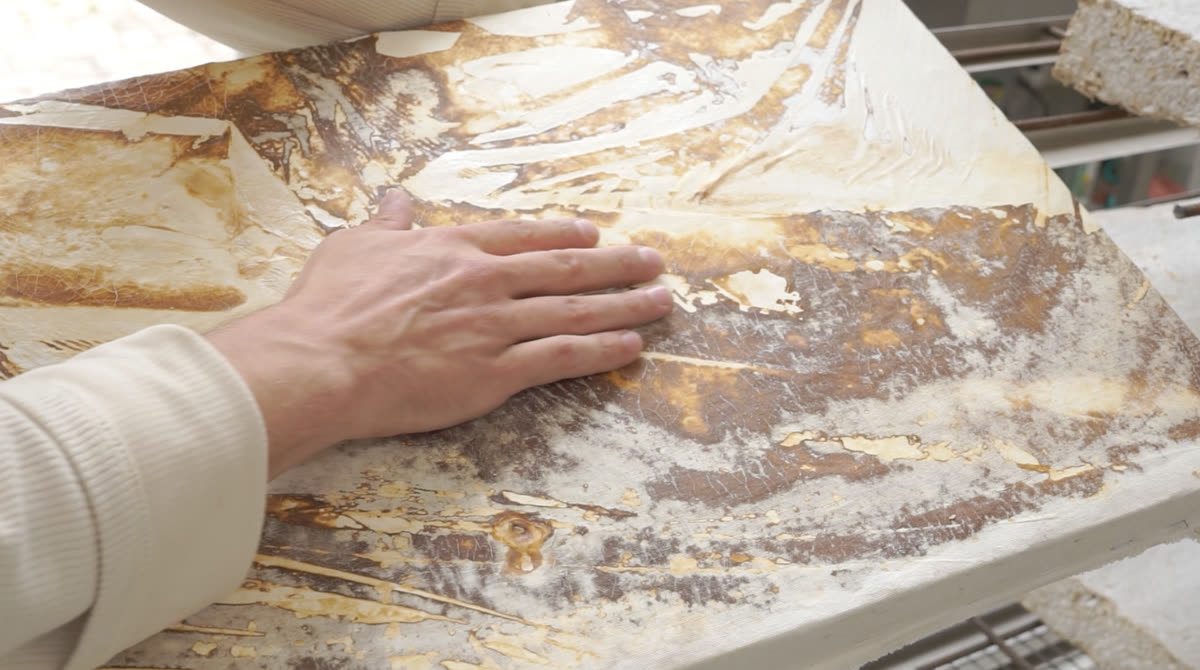
PALMYCO™ is produced in our active production lab. This footage documents the full process cycle — substrate preparation, mycelium inoculation, growth, heat-stabilisation, and finishing. No renders, no simulations. Real production conditions, repeatable process.
Duration — 1 min 34 sec
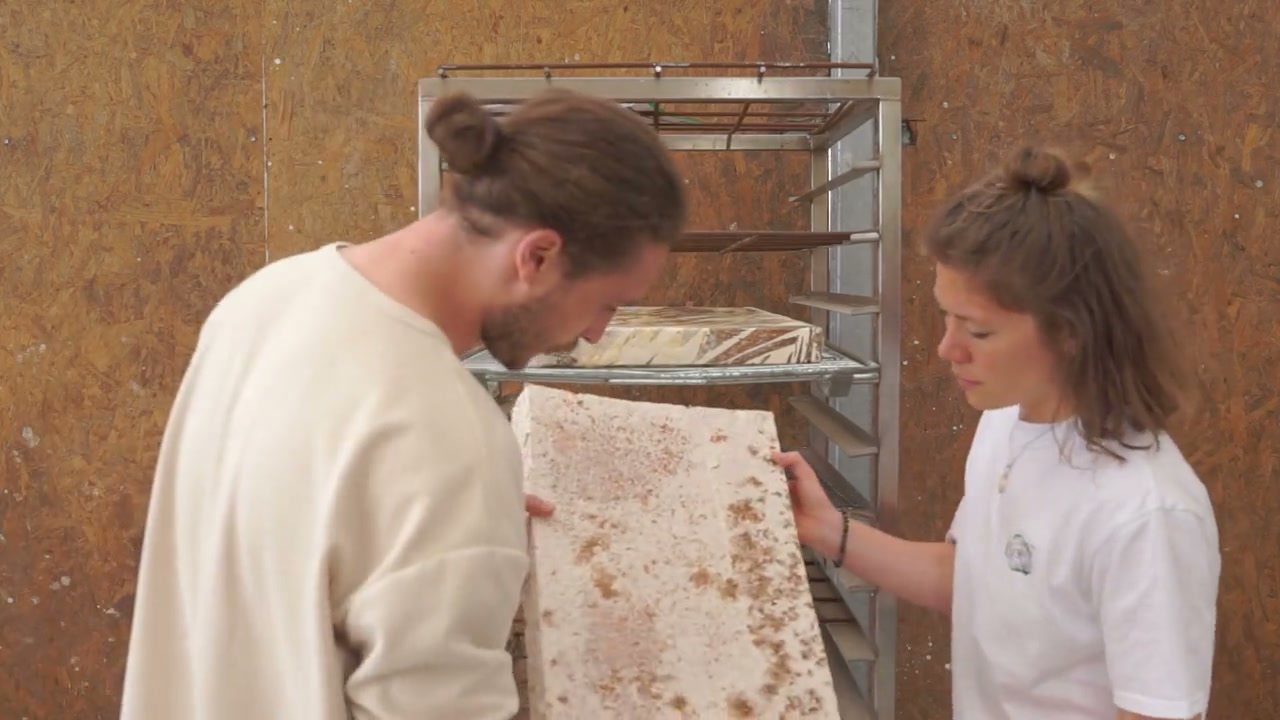
Material & process — photographs from the Dubai lab
← scroll · click to enlarge →
05 — Applications
Grown acoustic surfaces and pressed boards are in production today. Thermal insulation and protective packaging are in development on the same material system and the same Dubai production base.
PALMYCO™, the grown material, is used for acoustic panels, wall surfaces, lighting and furniture. The pressed board, made from spent mushroom substrate, serves events, brand activations and non-structural interiors.
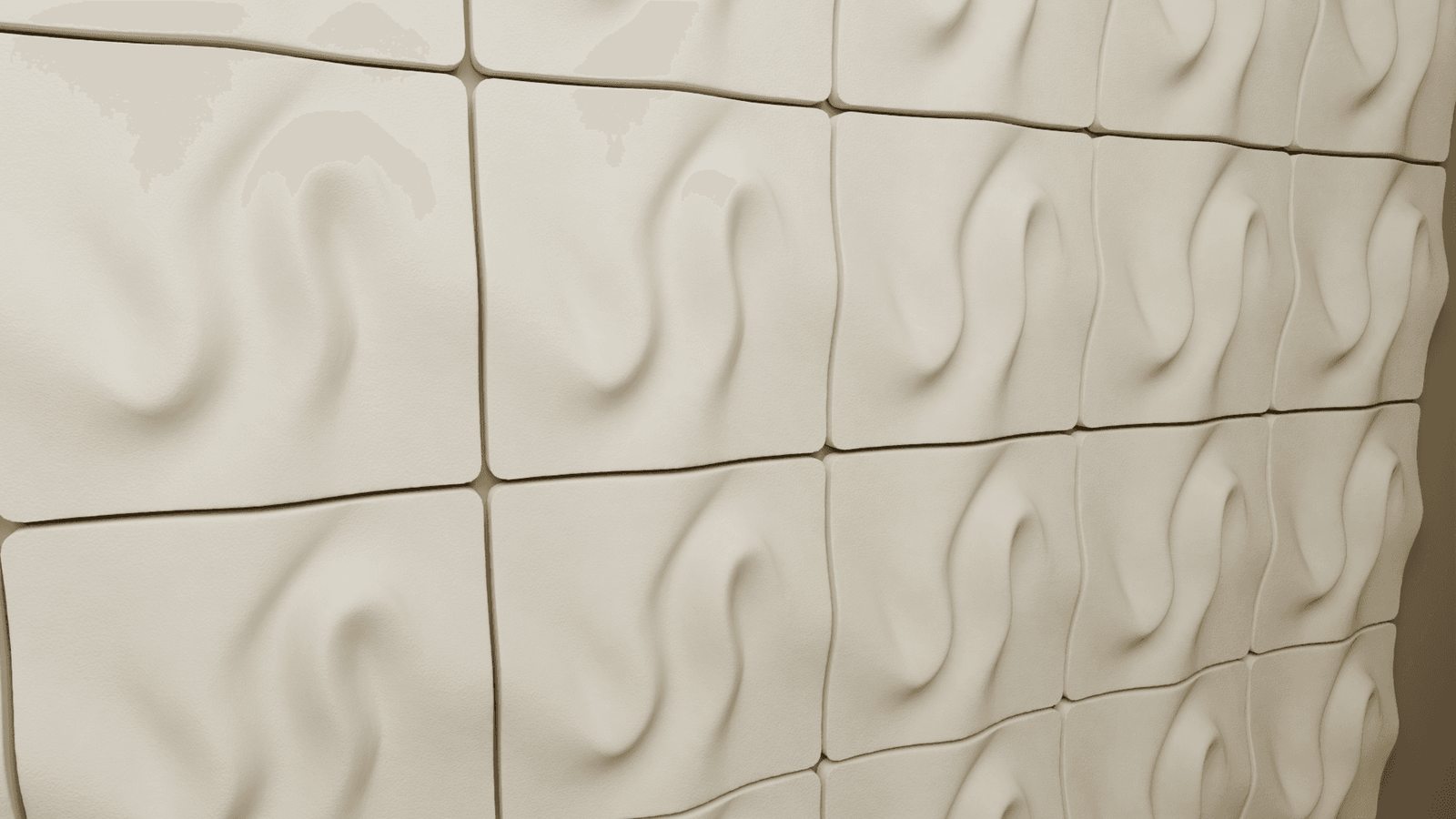
Acoustic — Grown
Decorative and specification-grade mycelium panels for interior architecture. First product: FOLD.
View →
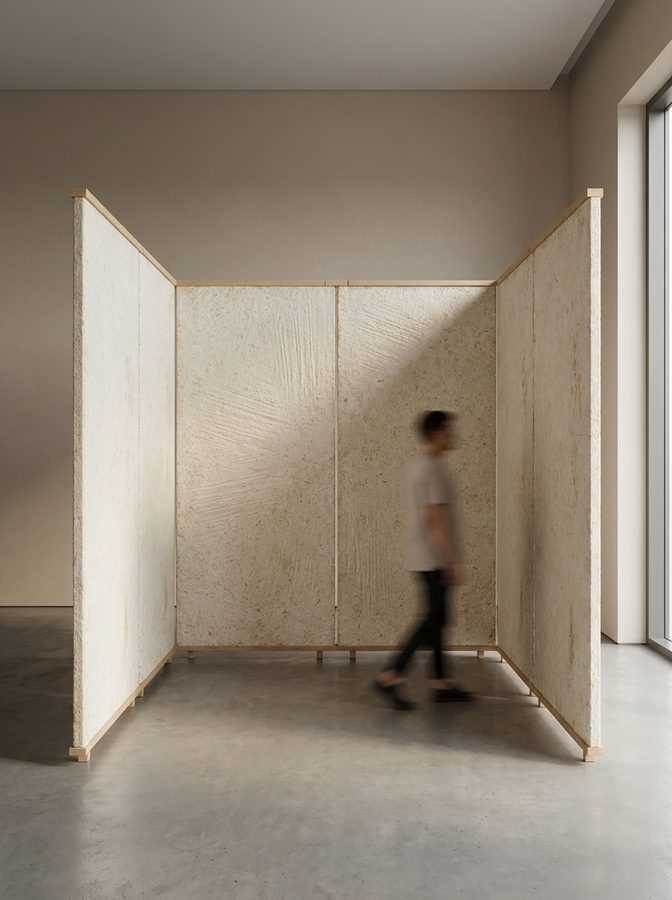
Boards — Pressed
Heat-pressed mycelium composite boards for events, brand activations, and temporary architecture.
View →
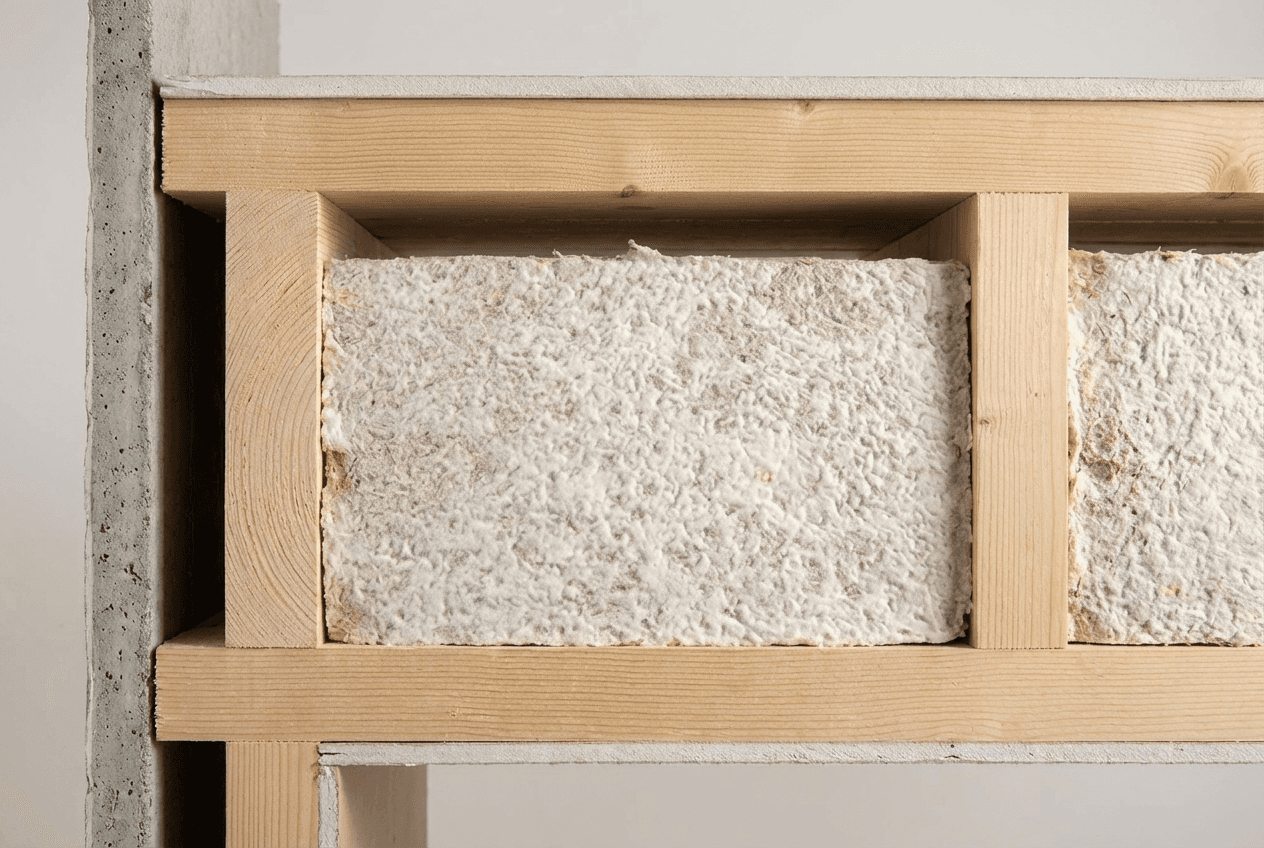
Thermal
Passive insulation grown from palm fibre, designed for hot-climate wall assemblies.
Read more →
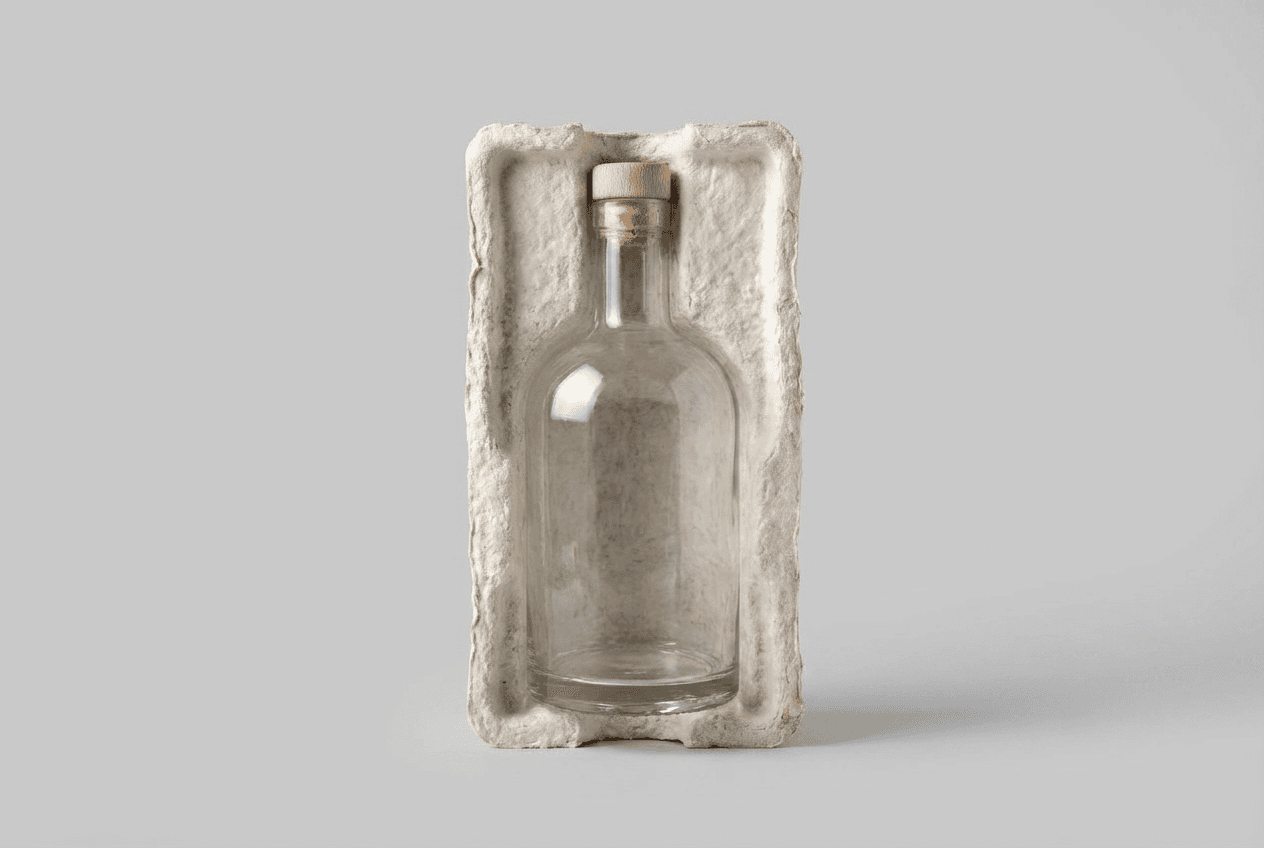
Packaging
Molded protective forms, compostable alternative to petroleum-based foams.
Read more →
Manifesto
Performance before narrative.
Waste is feedstock.
The region builds its own.
Every piece is grown, so no two repeat.
Grown, not manufactured.
06 — Team
A Dubai team combining material design and industrialisation, construction finance, IP strategy and commercial growth, from the first sample to delivery.
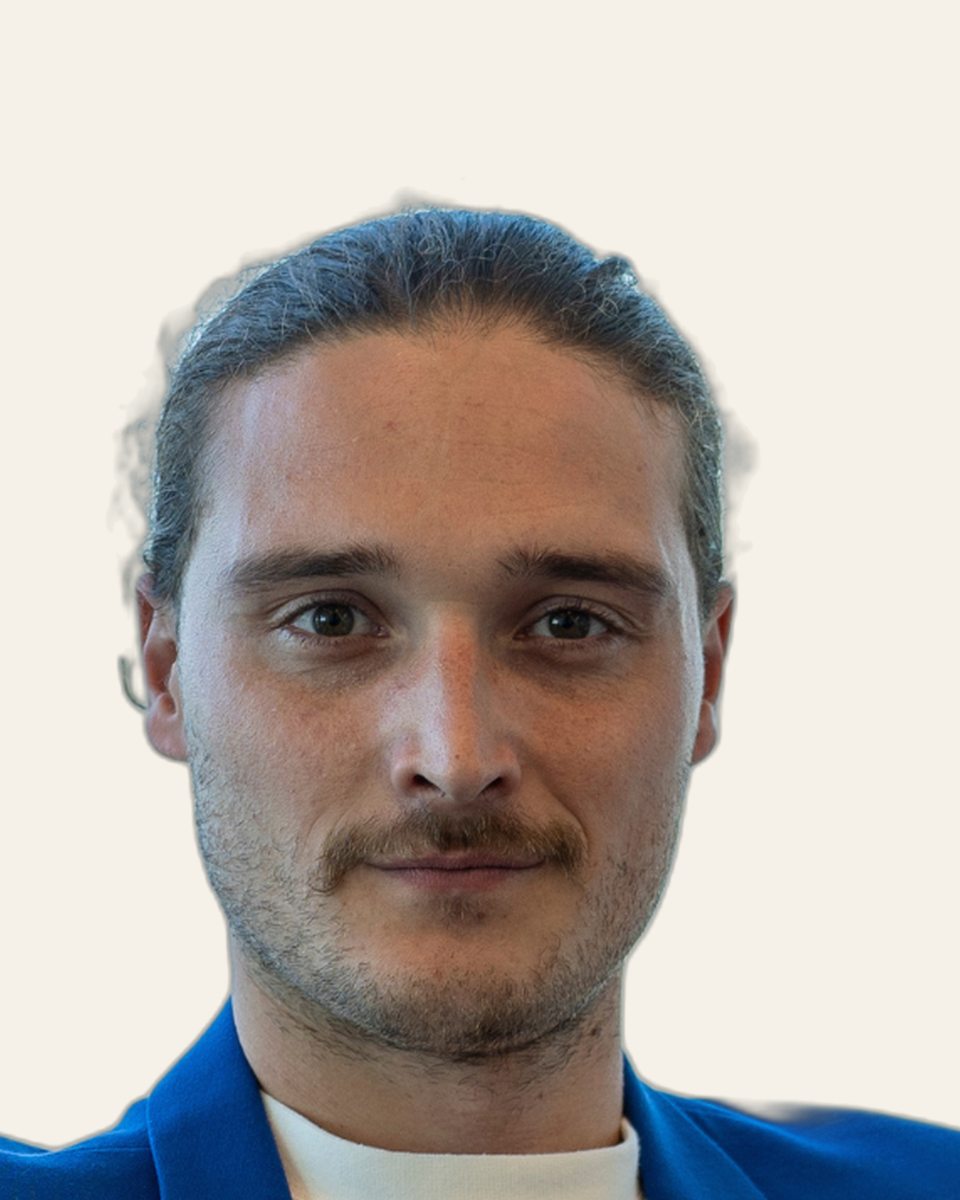
Andy Cartier
Founder & CEO — Mycelium Industrialization
Leads industrialization, production development, and material execution across Europe and the GCC.

Benjamin Rieux
Cofounder & CFO — Construction Finance
Oversees finance, construction economics, and the operational discipline behind scale.

Othman Ihrai
Cofounder & Head of IP + Legal Strategy
Leads IP, legal structure, and long-term defensibility of the platform.

Matthew Zelitt
Chief Growth Officer
Drives partnerships, pipeline development, and commercial growth for early deployments.
ONE PLATFORM, MANY ENVIRONMENTS
NUMU is built on a single principle. You make materials from what is around you, not what you ship in. In the Gulf that means turning regional agricultural waste into a local manufacturing base for acoustics, insulation, and composites. The same principle reaches much further.
In resource-constrained and extreme environments, including space, the constraint is identical. You cannot ship everything in. You grow and build with what is local. Mycelium is one of the few material systems that works under both sets of conditions, which is why the NUMU platform extends naturally from regional industry to the hardest environments there are.
Strategic partnership
NUMU has signed a Memorandum of Understanding with Titans Space Industries (TSI), the Orlando-based developer of reusable spaceplanes and orbital infrastructure. NUMU joins the consortium as its Bio-Materials and ISRU Composites Partner, exploring, as research, how mycelium biomanufacturing could produce composites and structures in extreme environments.
Read about the partnership →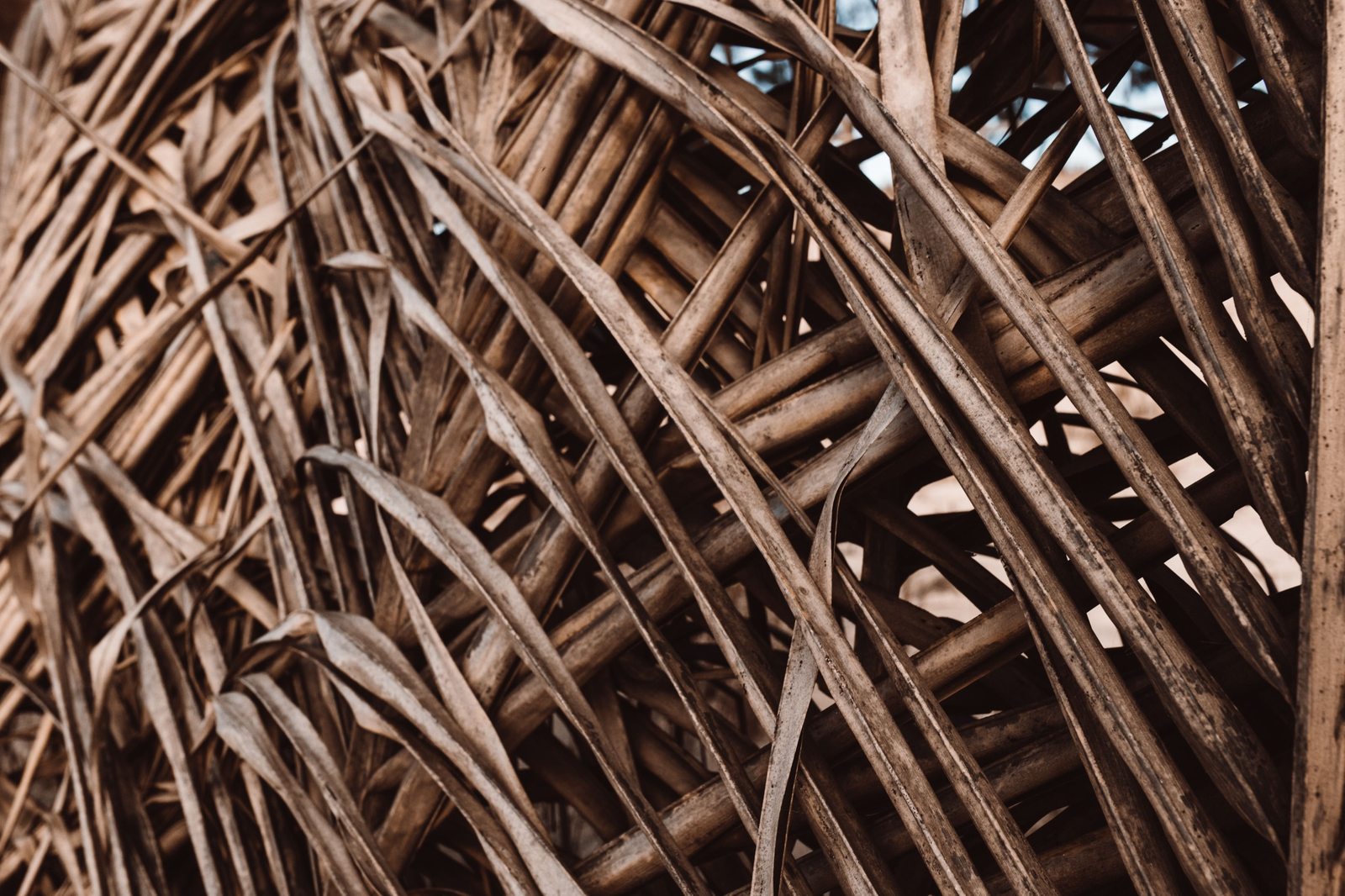
Regional feedstock
Local biomass becomes manufacturing input. Photograph.
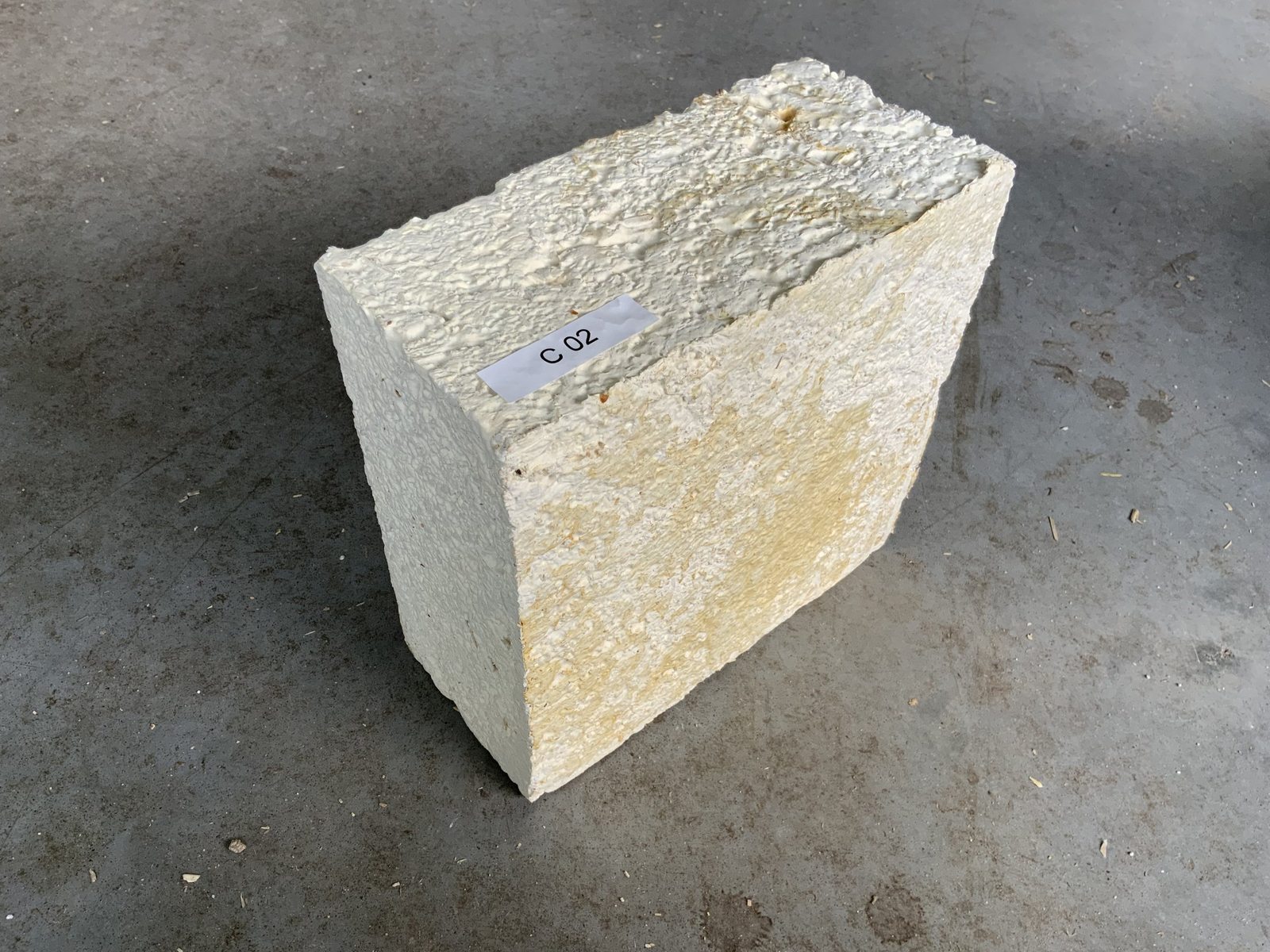
Grown composite
A material system grown into function. Photograph.

Extreme environments
The same ISRU logic, as research. Image: NASA, Artemis II.
07 — Contact
Based in Dubai. Samples, project consultation, and specification support for architects, interior designers, and fit-out teams.
By submitting, you agree that NUMU may use your email to respond to this request in line with our Privacy Policy and Terms.
Explore by application
Partners & institutions
Design partner
Packaging — LOI
Creative accelerator — winning finalist 2026
De Montfort University
Academic
American University of Sharjah
Academic
Heriot-Watt University Dubai
Academic
DIDI
Design network
